A shining illustration of what is wrong with our high schools. They are infested with people who hate America, such as this clown.
2006 Commencement Speech by Rob Cornell
I set up a chair on the front of the stage and while I am being introduced sit with my laptop open and my ipod on. I take out a cell phone and pretend to text message. Jay calls my name and then has to come over to get my attention. I sheepishly close my laptop and phone and shout into the mike. Sorry, I had to take that call … then realize I am shouting and take out my headphones. Quietly I say I had to take that call Mr. Conroy – it was my mom.
To the class: “You have been called the M-generation because of your ability to multi-task. However, in your lives you will be faced with many situations that demand your full attention – be sure you are ready and able to give it. Let’s all practice, right now. If you would please put away your cell phones, blackberries, game boys, ipods, and, of course, your calculators, I have some comments I would like to share with you.
Good Evening and a Spartan welcome, bienvenidos to all. I am deeply moved and honored that you have chosen me to share this milestone in your life journey. The moments we have shared, as students, teachers, and friends have shaped and defined who we are …… And I love who you are. In you I see warmth, compassion, strength, integrity, playfulness and joy. In you I see hope. I only wish we, my generation, could have given you an easier road to travel. We owe you an apology for leaving you wars in Afghanistan and Iraq, global warming, a massive national debt, an earth that has been plundered, a toxic environment, corrupt politics, corporate greed, and an increasingly polarized country.
The French historian Alexis de Tocqueville, a champion of liberty and democracy in the early 1800’s once said: "America is great because she is good. If America ever ceases to be good, America will cease to be great."
Consider if you will the following points:
Would a good America have a policy of pre-emptive war? War is a brutal and barbaric way to solve a problem. Unprovoked, we attacked a sovereign country with the headline “shock and awe”. That headline should have read “death and destruction”. One of the latest justifications of the war is “we are fighting terrorists there so we don’t have to fight them here”. That means we Americans are using Iraqis as human shields. Conservative estimates put the Iraqi civilian death toll at about 40,000 for our war.
Would a good America have policies that ignore longstanding international laws such as the Geneva Convention - Policies that condone torture and extraordinary rendition and allow lengthy imprisonment without rights?
Would a good America, the land of freedom and equality, deny that freedom based on race, gender, or sexual preference?
Would a good America allow wealth to accumulate in the hands of a few while many go hungry? And then pass tax cuts and laws that strengthen this disturbing trend?
Politicians and corporate spokespersons argue that the average American is doing very well. As a mathematician I cringe when I hear the word average used in this way. If you were standing with one leg immersed in a bucket of liquid oxygen and the other in a roaring fire, a statistician would tell you that on average the temperature is just fine. Look – Sean Hunter just pulled out his calculator. I can see him thinking, “Let’s see, if we consider the specific gravity and density of oxygen at 1 atmospheric pressure… Mr. Cornell that average would …” ….. Sean, put away your calculator ….. The point is: There is rising inequality in American’s economic well being. The top 10 % of Americans own about 70% of the nation’s wealth while the bottom 50%, one half of America, owns only 3%. Sarah McLachlan in her song World on Fire sings “The more we take the less we become. The fortune of one man means less for some”.
Would a good America support maximizing profits from our planet’s resources regardless of environmental degradation? Corporations export factories and jobs to third world countries, exploiting workers and causing great harm to local environments, at times receiving tax breaks for doing so. Corporate farming practices may keep food prices low, but cheap food has a price. That price is being paid by the horrible suffering of animals and the catastrophic damage done to your planet’s land and seas.
Would a good America have a government that seems to be more interested in serving the needs of big business than the needs of the individual? The number of registered lobbyists in Washington, D.C. increased from 16,342 in 2000 to 34,785 last year. That is 65 lobbyists for each member of congress. No wonder oil companies are given huge new tax breaks at a time of record profits and credit card companies are helping to write new bankruptcy laws. Enron could not have perpetrated its energy scams without the help of new legislation enacted by our elected officials. Many agencies, created to protect public interests, are now headed by former industry lobbyists.
Has America ceased to be great? It’s a question worth asking and a discussion that needs to take place. Alexis de Tocqueville also observed that it is easier for people to accept a simple lie than a complex truth.
In this day of the 30-second sound bite you are fed many simple statements. You must decide their degrees of truth. Quite often these statements take the form of “talking points” repeated over and over and over and over ….. Most minds like these short, often repeated phrases. They require little effort and often reinforce our belief that America is good.
What are the complex truths? I am not telling. Finding them is your last homework assignment and it is not an easy one. The media, by all accounts, is controlled by 4 or 5 major corporations. The next battle, one that is currently being fought, is over the freedom and flow of information on the Internet. I hope you will seek an in-depth source of news that pursues truth and presents all sides of any issue. Only then can you decide for yourself - and this will take much longer than 30 seconds - what parts of America are good and what parts need to be fixed.
I’ve always told my students that the most important thing they can take from my class is confidence in their ability to solve problems. The solution to any problem, regardless of how insurmountable it may seem, begins with the smallest step, the smallest of beginnings. Take that step and see where it leads.
I have painted for you a world in crisis, but it is not a world without hope. Crisis is opportunity. Even the smallest moment of your lives is an opportunity for you to shape the world around you. In the words of Margaret Mead, “Never doubt that a small group of thoughtful, committed citizens can change the world. Indeed, it is the only thing that ever has”.
The way in which you live your lives impacts the world every day. You must make conscious, informed, and healthy choices with an awareness of how those choices affect the people and environment that surrounds you.
Be an educated consumer. Eating local organic foods and walking or riding your bike more will not only contribute to the solution of several crises we are facing, but will lead to better health.
Take an active part in your government. Be an engaged voter and citizen. Know the issues. Give voice to your concerns. Participate in civil disobedience when necessary. It’s your country. Don’t accept the argument “that’s just the way things are done”.
There may be great sorrow in the world today, but there is also great joy. Each of us has the ability to find peace within ourselves. Meditate, pray, or find another way to have quiet reflective moments. Express yourself creatively. Find work that feeds your heart and soul as well as your pocketbook. (Play with the students a little here) Math is not the most important part of your life. Breathing is. Learn to breathe.
In closing, I’d like to share a brief story about Gandhi. In one of his many travels, he was asked by a reporter at a train station if he had any message he would like to share with his people. He did not hesitate as he replied, “My life is my message.”
May your life be a message of love, joy and peace.
Thank you.
I love you.
Thursday, June 15, 2006


Wednesday, June 14, 2006
Al Gore wants to save the world
I haven't seen Al Gore's "docuganda," and I doubt I will. I do, however, know a good deal about the global warming debate, having researched the issue several years ago for a cover story I did for BrainstormNW Magazine.
I did read Al Gore's book, "Earth in the Balance." I'm pretty sure, from the reviews of his movie that I have read, that it is a movie version of his book. His book was scary. Al Gore is a true believer.
At one point in his book he actually said that he believes that every one of our cultural institutions, from schools and churches to industry and commerce, should make eliminating man’s effect on the earth its single overriding goal.
This means, he wrote: "embarking on an all-out effort to use every policy and program, every law and institution, every treaty and alliance, every tactic and strategy, every plan and course of action to preserve and nurture our ecological system."
If we don't, he warned, there will be "terrible moral consequences". In the ultimate non-sequitir he compared the western ethic of production and consumption (that is, capitalism) to the totalitarian Nazi Germany war machine.
Does that sound like an extremist to you?
HL Mencken, the curmudgeonly journalist from the early part of the last century, has a couple of quotes that I think apply to Al Gore and all the environmental groups that are trying to whip up hysteria over the global warming issue:
"The urge to save humanity is almost always a false front for the urge to rule."
and
"The whole aim of practical politics is to keep the populace alarmed (and hence clamorous to be led to safety) by menacing it with an endless series of hobgoblins, all of them imaginary."
Both of these, right on the mark.
I did read Al Gore's book, "Earth in the Balance." I'm pretty sure, from the reviews of his movie that I have read, that it is a movie version of his book. His book was scary. Al Gore is a true believer.
At one point in his book he actually said that he believes that every one of our cultural institutions, from schools and churches to industry and commerce, should make eliminating man’s effect on the earth its single overriding goal.
This means, he wrote: "embarking on an all-out effort to use every policy and program, every law and institution, every treaty and alliance, every tactic and strategy, every plan and course of action to preserve and nurture our ecological system."
If we don't, he warned, there will be "terrible moral consequences". In the ultimate non-sequitir he compared the western ethic of production and consumption (that is, capitalism) to the totalitarian Nazi Germany war machine.
Does that sound like an extremist to you?
HL Mencken, the curmudgeonly journalist from the early part of the last century, has a couple of quotes that I think apply to Al Gore and all the environmental groups that are trying to whip up hysteria over the global warming issue:
"The urge to save humanity is almost always a false front for the urge to rule."
and
"The whole aim of practical politics is to keep the populace alarmed (and hence clamorous to be led to safety) by menacing it with an endless series of hobgoblins, all of them imaginary."
Both of these, right on the mark.
Tuesday, June 13, 2006
Potpourri
It's been two weeks since I have posted. I've been otherwise focused, and for some reason every time I thought to myself "I oughtta post something on that issue," I never ended up doing it.
So, there's a good bit of pent up things I'll comment on here, in short.
Governor's race:
Saxton jumped on the kicker gaffe by Kulongoski and took the unusual move of running radio ads to highlight the issue six months before the election. In my view this is a good move. Most campaign consultants will tell candidates to sit tight, raise money, and spend it all on media during the election cycle.
Saxton spending $$ now on these ads shows a couple things. 1) He is confident he will raise whatever money he needs in the general, so he can spend a few hundred thousand now and still have plenty in November. 2) He understands that he couldn't let the Governor's gaffe get covered up by months of other political noise and lose the chance to brand him as a tax hiker. This means Ron will be running the general election on fiscal conservatism, a winner for Republicans.
OSU Beavers:
I'm a baseball fan and spend a good deal of time watching my son play catcher for Lake Oswego. A good friend's son is one of the Beavers' starting pitchers, and so I've been really paying attention to the Beavs all season long.
Pat Casey has built a program that will benefit this state for years to come. He has developed a national baseball powerhouse using primarily northwest players. Almost all the talented high schoolers in Oregon now want to go to OSU. A few weeks ago my son, a rabid Duck fan, said "Dad, for the first time ever I would consider going to OSU."
Casey has shown that the northwest is no backwater when it comes to baseball talent, and that the kids don't have to go to USC or ASU to play at the highest level. They had NINE players drafted last week!
My kid is a freshman; he has some talent, and I can't tell you how much having a top tier baseball university in the state adds to the high school programs.
Blazers
A lot of my time lately has been consumed with the Blazer deal. For new visitors: I am helping ex-Blazer Terry Porter raise the capital to buy the Blazers from Paul Allen. The effort is going extremely well. Portland is begging to fall back in love with this team. The city has rallied around Terry Porter. The process will take several weeks to play out, but we are very optimistic that our effort has some very attractive elements to the seller.
This was a long shot when we started, but we have made far more progress than anybody really expected. We fully expect to be shoulder to shoulder with all the other bidders for the team.
Tram
It's going in, as I write. Macadam Avenue has been closed for two days as they install the big tower. This thing will be a forever monument to the Portland "vision" and its way of doing things. It is becoming increasingly clear that Portland simply does not want to compete.
Read Thomas Friedman's "The World is Flat." That is not a world that the Portland political culture wants to be a part of.
No, my friends in charge of Portland prefer sustainability and prevailing/living wages and planning and light rail and streetcars and bubble curbs and smart growth and transit oriented developments and eco-rooves and public private partnerships and tax abated $300 a square foot condos and urban renewal districts.
Can't be part of the flat world when we want to control all the outcomes, now can we?
So, there's a good bit of pent up things I'll comment on here, in short.
Governor's race:
Saxton jumped on the kicker gaffe by Kulongoski and took the unusual move of running radio ads to highlight the issue six months before the election. In my view this is a good move. Most campaign consultants will tell candidates to sit tight, raise money, and spend it all on media during the election cycle.
Saxton spending $$ now on these ads shows a couple things. 1) He is confident he will raise whatever money he needs in the general, so he can spend a few hundred thousand now and still have plenty in November. 2) He understands that he couldn't let the Governor's gaffe get covered up by months of other political noise and lose the chance to brand him as a tax hiker. This means Ron will be running the general election on fiscal conservatism, a winner for Republicans.
OSU Beavers:
I'm a baseball fan and spend a good deal of time watching my son play catcher for Lake Oswego. A good friend's son is one of the Beavers' starting pitchers, and so I've been really paying attention to the Beavs all season long.
Pat Casey has built a program that will benefit this state for years to come. He has developed a national baseball powerhouse using primarily northwest players. Almost all the talented high schoolers in Oregon now want to go to OSU. A few weeks ago my son, a rabid Duck fan, said "Dad, for the first time ever I would consider going to OSU."
Casey has shown that the northwest is no backwater when it comes to baseball talent, and that the kids don't have to go to USC or ASU to play at the highest level. They had NINE players drafted last week!
My kid is a freshman; he has some talent, and I can't tell you how much having a top tier baseball university in the state adds to the high school programs.
Blazers
A lot of my time lately has been consumed with the Blazer deal. For new visitors: I am helping ex-Blazer Terry Porter raise the capital to buy the Blazers from Paul Allen. The effort is going extremely well. Portland is begging to fall back in love with this team. The city has rallied around Terry Porter. The process will take several weeks to play out, but we are very optimistic that our effort has some very attractive elements to the seller.
This was a long shot when we started, but we have made far more progress than anybody really expected. We fully expect to be shoulder to shoulder with all the other bidders for the team.
Tram
It's going in, as I write. Macadam Avenue has been closed for two days as they install the big tower. This thing will be a forever monument to the Portland "vision" and its way of doing things. It is becoming increasingly clear that Portland simply does not want to compete.
Read Thomas Friedman's "The World is Flat." That is not a world that the Portland political culture wants to be a part of.
No, my friends in charge of Portland prefer sustainability and prevailing/living wages and planning and light rail and streetcars and bubble curbs and smart growth and transit oriented developments and eco-rooves and public private partnerships and tax abated $300 a square foot condos and urban renewal districts.
Can't be part of the flat world when we want to control all the outcomes, now can we?
Wednesday, May 31, 2006
U of O's new and improved diversity plan
You've just got to read this terrific column about the University of Oregon's new 46-page "Diversity Plan."
If you recall, the University released its first run at a diversity plan last year, and it was deemed too politically correct for even the faculty at the famously liberal U of O. It was Orwellian in the extreme, filled with double-speak about tolerance and diversity while proposing policies that would have severely limited speech that the Universities "Bias Response Teams" deemed intolerant.
So they tried again. Strike two.
The columnist analyzes it better than I could, in the form of an open letter to U of O President David Frohnmeyer.
Go read it - it is fabulous.
If you recall, the University released its first run at a diversity plan last year, and it was deemed too politically correct for even the faculty at the famously liberal U of O. It was Orwellian in the extreme, filled with double-speak about tolerance and diversity while proposing policies that would have severely limited speech that the Universities "Bias Response Teams" deemed intolerant.
So they tried again. Strike two.
The columnist analyzes it better than I could, in the form of an open letter to U of O President David Frohnmeyer.
Go read it - it is fabulous.
Tuesday, May 30, 2006
Portland again on the bleeding edge of loopiness
The Portland Tribune reports today that Portland might be the first U. S. city to adopt a "Youth Bill of Rights."
It seems Mayor Potter and outgoing county chair Dianne Linn are leading a "Youth Summit," where about 1000 students from Portland area school districts will vote on the details of the Youth Bill of Rights. Then the city will vote to adopt it, and Mayor Potter has indicated he wants its elements to help form city policy.
The bill is still in draft form, but the "rights" it will list are things such as the right to education, the right to extracurricular activities, the right to school funding and the right to physical, spiritual and mental health.
It was 100% predictable that the enumerated "rights" in the bill are not rights at all. Nobody bothered to explain to the kids that rights are things that government can't do to you, they are not things that government must do for you. You'd think that the adults involved with this effort might care a little bit if the children actually learned the definition of what it is they are trying to produce.
But that wouldn't serve the purposes the adults in charge so obviously have for this effort - to use the kids' involvement to push for all their favored social policies. Plus, of course, liberals are almost always confused about what rights are in the first place.
Followup: The Netherlands have long been on the cutting edge of liberalism when it comes to children's rights. Now a new political party is getting organized in the Netherlands that has as its central issue advocating for the right if children to have sex with adults. Who said there's no slippery slope?
It seems Mayor Potter and outgoing county chair Dianne Linn are leading a "Youth Summit," where about 1000 students from Portland area school districts will vote on the details of the Youth Bill of Rights. Then the city will vote to adopt it, and Mayor Potter has indicated he wants its elements to help form city policy.
The bill is still in draft form, but the "rights" it will list are things such as the right to education, the right to extracurricular activities, the right to school funding and the right to physical, spiritual and mental health.
It was 100% predictable that the enumerated "rights" in the bill are not rights at all. Nobody bothered to explain to the kids that rights are things that government can't do to you, they are not things that government must do for you. You'd think that the adults involved with this effort might care a little bit if the children actually learned the definition of what it is they are trying to produce.
But that wouldn't serve the purposes the adults in charge so obviously have for this effort - to use the kids' involvement to push for all their favored social policies. Plus, of course, liberals are almost always confused about what rights are in the first place.
Followup: The Netherlands have long been on the cutting edge of liberalism when it comes to children's rights. Now a new political party is getting organized in the Netherlands that has as its central issue advocating for the right if children to have sex with adults. Who said there's no slippery slope?
Thursday, May 25, 2006
I wish I was as smart as George Will
I've never posted on illegal immigration before, because there are plenty of bloggers who focus on it and I don't think I have a lot to add.
George Will wrote something on the issue of declaring English our national language that makes a lot of sense, and so I post it below:
“….Declaring English the national language is a mere gesture. But by ending bilingual ballots, American law would perform its expressive function of buttressing, by codifying and vivifying, certain national assumptions and aspirations.
"Among those is this: The idea of citizenship becomes absurd when sundered from the ability to understand the nation’s civic conversation.
"What makes Americans generally welcoming of immigrants, and what makes immigrants generally assimilable, is that this is a creedal nation, one dedicated to certain propositions, not one whose origins and identity are bound up with ethnicity. But if you are to be welcomed to the enjoyment of American liberty, then America has a few expectations of you.
"One is that you can read the nation’s founding documents and laws, and can comprehend the political discourse that precedes the casting of ballots."
Bingo. This is a creedal nation. Assimilating here means you understand and are committed to that creed - the foundational principles of our nation: individual rights and the rule of law. This is what unites us as a nation and is what has created our unique American culture.
Can people who do not speak English both understand and be committed to these principles? Of course.
But can they participate in the political discourse that helps strengthen and preserve our republic and our culture? Not really.
What has always made me nervouse about so-called "multi-culturalists" is that they implicitly take the position that there is no such thing as an American culture that is worthy of being preserved and protected. And so they seek to preserve and protect the native culture of all immigrant groups by supporting policies such as bilingual education in schools, ballots with multiple languages, etc.
But there is a unique and important American culture that is closely bound together with the founding principles of our nation. If immigrants want to come here, become a part of our culture, and adopt these principles, then I welcome them. This does not mean they have to give up any of the rich cultural traditions of their native land - unless those traditions are in conflict with the foundations of American liberty - individual rights and the rule of law.
It is no accident that the people and groups who support "multi-culturalism" also tend to be pretty fuzzy on the notion of individual rights. In fact they are pretty much the same people who are always pushing group rights and identity poltics.
In other words, they do not support (and in some respects are outright hostile toward) the most fundamental of American principles.
George Will wrote something on the issue of declaring English our national language that makes a lot of sense, and so I post it below:
“….Declaring English the national language is a mere gesture. But by ending bilingual ballots, American law would perform its expressive function of buttressing, by codifying and vivifying, certain national assumptions and aspirations.
"Among those is this: The idea of citizenship becomes absurd when sundered from the ability to understand the nation’s civic conversation.
"What makes Americans generally welcoming of immigrants, and what makes immigrants generally assimilable, is that this is a creedal nation, one dedicated to certain propositions, not one whose origins and identity are bound up with ethnicity. But if you are to be welcomed to the enjoyment of American liberty, then America has a few expectations of you.
"One is that you can read the nation’s founding documents and laws, and can comprehend the political discourse that precedes the casting of ballots."
Bingo. This is a creedal nation. Assimilating here means you understand and are committed to that creed - the foundational principles of our nation: individual rights and the rule of law. This is what unites us as a nation and is what has created our unique American culture.
Can people who do not speak English both understand and be committed to these principles? Of course.
But can they participate in the political discourse that helps strengthen and preserve our republic and our culture? Not really.
What has always made me nervouse about so-called "multi-culturalists" is that they implicitly take the position that there is no such thing as an American culture that is worthy of being preserved and protected. And so they seek to preserve and protect the native culture of all immigrant groups by supporting policies such as bilingual education in schools, ballots with multiple languages, etc.
But there is a unique and important American culture that is closely bound together with the founding principles of our nation. If immigrants want to come here, become a part of our culture, and adopt these principles, then I welcome them. This does not mean they have to give up any of the rich cultural traditions of their native land - unless those traditions are in conflict with the foundations of American liberty - individual rights and the rule of law.
It is no accident that the people and groups who support "multi-culturalism" also tend to be pretty fuzzy on the notion of individual rights. In fact they are pretty much the same people who are always pushing group rights and identity poltics.
In other words, they do not support (and in some respects are outright hostile toward) the most fundamental of American principles.
Saturday, May 20, 2006
Oregon School Trust Lands
One of the little known elements of Oregon's school revenue is the "Oregon School Trust" lands that are managed by the state. The state is statutorily required to maximize revenue from these lands, and the money flows to the Common School Fund.
The Trust lands include the Elliot State Forest, a 93,000 forest near Coos Bay, and a slew of rangeland. The state is now in the middle of a long term "forest management plan" which will specify which parts of the forest are harvested, the annual cut, habitat preservation, etc.
According to the state, the market value of the forest is upwards of a half a billion dollars. The management plan expects to yeild about 4% on that value. Why so low? Mostly because the state is uniquely ill-suited to actually manage a forest for maximum revenue, because priorities other than revenue maximization always carry the day when they grind though their bureaucratic public planning processes.
All the greenies have the ear of the state bureaucrats who draw up the plan. So they accept a far lower yield than they could get if they actually followed the state law and maximized revenue from the forest.
Who comes out on the short end? The schoolkids. Just the forest lands - ignoring all the other lands held in the trust - could easily spin off an additional $20 million to the Common School Fund.
John Charles of the Cascade Policy Institute has a great idea how to do it: Sell the Elliot State Forest and let the Oregon Investment Council invest the proceeds on behalf of the Common School Fund.
The OIC has routinely made 15+% on the funds under its management. But for the sake of argument let's assume that the proceeds from selling the forest simply yeild a long term average of 8%. (This is a very realistic long term average return for a portfolio of financial assets.)
That means $20,000,000 each year additional fund for the schools.
Who is making the decision to short Oregon's schoolkids by $20 million? The Governor, Treasurer and Secretary of State form the board that makes this decision. Together they are each year deciding to take $20 million out of the schools in order to placate their buddies the environmental groups.
(Remember - the actual figure is probably far far higher than $20 million. If they sold off the range lands as well, and if the actual return was closer to the OIC's long term average, the annual return could easily be upwards of $80 million.)
Ron Saxton should ask Governor Kulongoski why he hasn't fulfilled his statutory responsibility to maximize the revenue from these trust lands at a time when he is touting his plan to increase school funding.
I think it would be a great campaign issue.
The Trust lands include the Elliot State Forest, a 93,000 forest near Coos Bay, and a slew of rangeland. The state is now in the middle of a long term "forest management plan" which will specify which parts of the forest are harvested, the annual cut, habitat preservation, etc.
According to the state, the market value of the forest is upwards of a half a billion dollars. The management plan expects to yeild about 4% on that value. Why so low? Mostly because the state is uniquely ill-suited to actually manage a forest for maximum revenue, because priorities other than revenue maximization always carry the day when they grind though their bureaucratic public planning processes.
All the greenies have the ear of the state bureaucrats who draw up the plan. So they accept a far lower yield than they could get if they actually followed the state law and maximized revenue from the forest.
Who comes out on the short end? The schoolkids. Just the forest lands - ignoring all the other lands held in the trust - could easily spin off an additional $20 million to the Common School Fund.
John Charles of the Cascade Policy Institute has a great idea how to do it: Sell the Elliot State Forest and let the Oregon Investment Council invest the proceeds on behalf of the Common School Fund.
The OIC has routinely made 15+% on the funds under its management. But for the sake of argument let's assume that the proceeds from selling the forest simply yeild a long term average of 8%. (This is a very realistic long term average return for a portfolio of financial assets.)
That means $20,000,000 each year additional fund for the schools.
Who is making the decision to short Oregon's schoolkids by $20 million? The Governor, Treasurer and Secretary of State form the board that makes this decision. Together they are each year deciding to take $20 million out of the schools in order to placate their buddies the environmental groups.
(Remember - the actual figure is probably far far higher than $20 million. If they sold off the range lands as well, and if the actual return was closer to the OIC's long term average, the annual return could easily be upwards of $80 million.)
Ron Saxton should ask Governor Kulongoski why he hasn't fulfilled his statutory responsibility to maximize the revenue from these trust lands at a time when he is touting his plan to increase school funding.
I think it would be a great campaign issue.
Wednesday, May 17, 2006
Let's Move Forward

Ron Saxton is going to be the next governor of Oregon.
This was a tough primary. People got bruised. Time to show that we are indeed a party, and while we can have a vigorous - even nasty - family fight, when it is over we all know who the opponent really is.
Had Kevin or Jason won, I would fight like hell to get him elected in November. I hope Kevin and Jason's supporters will do what both of them so graciously pledged in their concession speeches last night - to help get Ron elected.
I hope those of you who are skeptical of Ron's conservative bonafides will come to know him as I do, and understand the full measure of his core conservatism. There will obviously be times when I disagree with one or another position Ron takes. That is normal, and it would be scary if it were otherwise.
But if this Party gets behind Ron Saxton, we will break a quarter-century curse on the Republican party in Oregon.
Let's go!
Wednesday, May 10, 2006
Another poll shows Saxton with commanding lead
Survey USA released a poll today of more than 400 likely Republican voters. Saxton by 13%
This could mean that all the negative ads run by Mannix have fallen on deaf ears. My criticism of the last Survey USA poll was that they did not qualify likely voters. They did in this time. They excluded roughly half the people they called, as not likely to vote. That's about right - turnout last primary was 46%.
This poll was taken on two nights this week - after the Clapper ads and Mannix ads have had a little running room. But Saxton's lead has crystallized.
I'm biased, because I'm supporting Ron, but I find the story this poll tells to be credible.
If it is accurate, it means there is a good chance Ron is the nominee.
If/when that comes to pass, I hope my good friends and comrades in arms who supported one of the other candidates will help push Ron over the top in November.
I will certainly work hard to elect whichever Republican candidate wins. I assume every other committed Republican will do the same, whomever they supported in the primary.
This could mean that all the negative ads run by Mannix have fallen on deaf ears. My criticism of the last Survey USA poll was that they did not qualify likely voters. They did in this time. They excluded roughly half the people they called, as not likely to vote. That's about right - turnout last primary was 46%.
This poll was taken on two nights this week - after the Clapper ads and Mannix ads have had a little running room. But Saxton's lead has crystallized.
I'm biased, because I'm supporting Ron, but I find the story this poll tells to be credible.
If it is accurate, it means there is a good chance Ron is the nominee.
If/when that comes to pass, I hope my good friends and comrades in arms who supported one of the other candidates will help push Ron over the top in November.
I will certainly work hard to elect whichever Republican candidate wins. I assume every other committed Republican will do the same, whomever they supported in the primary.
Monday, May 08, 2006
Loren Parks plows another quarter million into Mannix
A week to go and the race is in the ugly stage.
It is too bad it had to get this way, but we all knew if Kevin got behind he would go negative. That's how it is done. Ron Saxton is a big boy. He knew if his campaign caught on, that Kevin would have to attack. No whining.
But it is OK to hit back.
Saxton's response ads started today, and will continue through the week. They highlight the zillions of tax and fee increases Kevin voted for as a legislator, among other things.
So, fair enough. The negative campaigning has started, and it was inevitable, unless the race was a cakewalk. Voters always say they hate negative campaignng, but it works. So they must not really hate it that much.
Here's what we know: Loren Parks has given Mannix another quarter million. That makes it about a cool $750K counting the "independent" ad campaign done by Gregg Clapper.
Is that bothersome? One reclusive zillionaire provides the bulk of the funding for a governor candidate. Problem?
At the very least it reflects the fact that Kevin Mannix does not have a broad base of financial support. At the most it means that some shadowy out-of-state eccentric recluse has bought himself a governorship.
Here's what the Saxton campaign has to say about it:
Statement Regarding Mannix C&E Report and Loren Parks Contribution:
The following statement is to be attributed to Felix Schein, Saxton Campaign Manager.
"Republican voters ought to ask themselves whether they are comfortable with a candidate who's willing to sell his campaign to the highest bidder - especially when that bidder is a Nevada sex therapist who has repeatedly been sued for sexual harassment, operates a questionable sex therapy website, and whose values so clearly oppose those of Mr. Mannix's other supporters.
"It reeks of hypocrisy for Kevin Mannix to tout his values and respect for women and yet allow his campaign to be bought by Loren Parks.
"Contributions in excess of $500,000 to Kevin Mannix by Loren Parks beg the question - what does Loren Parks get for his money, could Kevin Mannix ever say no, and are Oregon Republicans going to accept an out-of-state contributors attempt to buy the gubernatorial election."
Seven days to go.
It is too bad it had to get this way, but we all knew if Kevin got behind he would go negative. That's how it is done. Ron Saxton is a big boy. He knew if his campaign caught on, that Kevin would have to attack. No whining.
But it is OK to hit back.
Saxton's response ads started today, and will continue through the week. They highlight the zillions of tax and fee increases Kevin voted for as a legislator, among other things.
So, fair enough. The negative campaigning has started, and it was inevitable, unless the race was a cakewalk. Voters always say they hate negative campaignng, but it works. So they must not really hate it that much.
Here's what we know: Loren Parks has given Mannix another quarter million. That makes it about a cool $750K counting the "independent" ad campaign done by Gregg Clapper.
Is that bothersome? One reclusive zillionaire provides the bulk of the funding for a governor candidate. Problem?
At the very least it reflects the fact that Kevin Mannix does not have a broad base of financial support. At the most it means that some shadowy out-of-state eccentric recluse has bought himself a governorship.
Here's what the Saxton campaign has to say about it:
Statement Regarding Mannix C&E Report and Loren Parks Contribution:
The following statement is to be attributed to Felix Schein, Saxton Campaign Manager.
"Republican voters ought to ask themselves whether they are comfortable with a candidate who's willing to sell his campaign to the highest bidder - especially when that bidder is a Nevada sex therapist who has repeatedly been sued for sexual harassment, operates a questionable sex therapy website, and whose values so clearly oppose those of Mr. Mannix's other supporters.
"It reeks of hypocrisy for Kevin Mannix to tout his values and respect for women and yet allow his campaign to be bought by Loren Parks.
"Contributions in excess of $500,000 to Kevin Mannix by Loren Parks beg the question - what does Loren Parks get for his money, could Kevin Mannix ever say no, and are Oregon Republicans going to accept an out-of-state contributors attempt to buy the gubernatorial election."
Seven days to go.
Thursday, May 04, 2006
Saxton Leads by 3%
KATU is releasing a poll tonight that shows Saxton leading Mannix by 3%.
This is a very tight race and now is crunch time. Ten days left. I thought this would be a good time to repost my original endorsement of Ron, which I first put up in January:
Saxton for Governor
I am supporting Ron Saxton’s effort to win the Republican nomination for Governor.
I have taken awhile to make this decision, because we have three very solid Republican candidates. I would happily and enthusiastically support any of them in the general election, but I think Ron Saxton is the best candidate, and so I will work to help him win the primary in May.
Before going into my reasons for supporting Ron, I want to address an important issue: lots of conservative bloggers have been trying to paint Ron Saxton as a liberal, or as an inauthentic Republican - a RINO.Let me put it simply: They are wrong.
Ron is not only the most fiscally conservative candidate running for governor, I believe he has the best grasp of precisely what is wrong about they way Oregon government operates right now and how to correct it.
On social issues, Ron is conservative where it matters: he would sign a ban on partial birth abortion, and he supports parental notification. He may not be as much as an abortion purist as the other candidates, but I have news for you: it doesn’t matter who the governor is – you’re not going to get more than this.
There’s been a lot of discussion about Ron’s association with Diana Goldschmidt, which, it is claimed, taints him because she is married to Neil Goldschmidt. Diana is a long time loyal Republican, and she supported Ron’s last run for Governor. Ron was instrumental in bringing Diana in to serve as interim superintendent of PPS, which was a very good move.
Did Ron’s firm also have various business dealings with Neil? Of course. Ron was the managing partner of a large law firm in Portland. Goldschmidt was involved with most every significant business deal in the city. Their professional lives inevitably crossed.
The real issue here is that Ron’s opponents want you to believe that he is a part of the “central planning/pro-light-rail/anti-car/anti property rights” culture that Goldschmidt ushered in and that has so badly damaged Portland and Oregon.
He’s not. I know him; I’ve talked with him at length about every one of these issues. I’ve literally drilled him on the gamut of things that drive me crazy about the political culture in Oregon. He’s as disgusted as I am about the way things are done here.
More important, he understands what he needs to do as governor to correct it, starting with a wholesale change of the people at every level of state government.
He understands that we need more roads, and that light rail is a bad investment if our goal is actually to move people as efficiently as possible. He understands that the land use system in Oregon has created hundreds of planning fiefdoms in city halls and county seats in every corner of the state that make building even the simplest structure an expensive and frustrating nightmare.
He understands that government’s job should not be to pick winners and losers, and that our land use laws are one of the single biggest obstacles to job growth in Oregon. (The tax structure is another.) He understands that competition is critical to reforming schools, and that PERS is devouring the budgets of every level of government.
I’ve talked with Ron at length about all of these things and more. I think his rural/farming background combines with his legal/business dealings in his professional life to give him a visceral understanding of what is wrong with Oregon. I don’t think the other candidates grasp it quite as well.
And that is why I am supporting Ron Saxton for governor.
One last thing: Ron has the best chance of any Republican candidate to win in November. Hands down. Any Republican who wants to win a statewide race in Oregon better have some strategy to pull 33-35% of the votes in Multnomah County. Ron is the only one who could do that.
In fact, I think that the primary will be a harder race for Ron to win than the general election.
So I urge you to take another look at Ron Saxton, and make a judgment for yourself. There are plenty of people I respect trying to make him appear to be a latte liberal RINO. I get that – they have chosen sides and are trying to help their candidate. But it's not true. I like the other candidates both personally and politically, and I will not attempt to run either of them down.
They each have many things to recommend them, and I would hope that their supporters would focus their energy on convincing people of these positive attributes rather than trying to denigrate Ron Saxton.
I don't think most people think I am a liberal, nor Don McIntire, who is also supporting Ron.
All I ask is that you take some time to listen to what Ron has to say, and judge for yourself whether he has a good handle on how to turn around the damage done in 25 years of Goldscmidt/Roberts/Katz/Kitz/Kulongoski rule in Oregon.
This is a very tight race and now is crunch time. Ten days left. I thought this would be a good time to repost my original endorsement of Ron, which I first put up in January:
Saxton for Governor
I am supporting Ron Saxton’s effort to win the Republican nomination for Governor.
I have taken awhile to make this decision, because we have three very solid Republican candidates. I would happily and enthusiastically support any of them in the general election, but I think Ron Saxton is the best candidate, and so I will work to help him win the primary in May.
Before going into my reasons for supporting Ron, I want to address an important issue: lots of conservative bloggers have been trying to paint Ron Saxton as a liberal, or as an inauthentic Republican - a RINO.Let me put it simply: They are wrong.
Ron is not only the most fiscally conservative candidate running for governor, I believe he has the best grasp of precisely what is wrong about they way Oregon government operates right now and how to correct it.
On social issues, Ron is conservative where it matters: he would sign a ban on partial birth abortion, and he supports parental notification. He may not be as much as an abortion purist as the other candidates, but I have news for you: it doesn’t matter who the governor is – you’re not going to get more than this.
There’s been a lot of discussion about Ron’s association with Diana Goldschmidt, which, it is claimed, taints him because she is married to Neil Goldschmidt. Diana is a long time loyal Republican, and she supported Ron’s last run for Governor. Ron was instrumental in bringing Diana in to serve as interim superintendent of PPS, which was a very good move.
Did Ron’s firm also have various business dealings with Neil? Of course. Ron was the managing partner of a large law firm in Portland. Goldschmidt was involved with most every significant business deal in the city. Their professional lives inevitably crossed.
The real issue here is that Ron’s opponents want you to believe that he is a part of the “central planning/pro-light-rail/anti-car/anti property rights” culture that Goldschmidt ushered in and that has so badly damaged Portland and Oregon.
He’s not. I know him; I’ve talked with him at length about every one of these issues. I’ve literally drilled him on the gamut of things that drive me crazy about the political culture in Oregon. He’s as disgusted as I am about the way things are done here.
More important, he understands what he needs to do as governor to correct it, starting with a wholesale change of the people at every level of state government.
He understands that we need more roads, and that light rail is a bad investment if our goal is actually to move people as efficiently as possible. He understands that the land use system in Oregon has created hundreds of planning fiefdoms in city halls and county seats in every corner of the state that make building even the simplest structure an expensive and frustrating nightmare.
He understands that government’s job should not be to pick winners and losers, and that our land use laws are one of the single biggest obstacles to job growth in Oregon. (The tax structure is another.) He understands that competition is critical to reforming schools, and that PERS is devouring the budgets of every level of government.
I’ve talked with Ron at length about all of these things and more. I think his rural/farming background combines with his legal/business dealings in his professional life to give him a visceral understanding of what is wrong with Oregon. I don’t think the other candidates grasp it quite as well.
And that is why I am supporting Ron Saxton for governor.
One last thing: Ron has the best chance of any Republican candidate to win in November. Hands down. Any Republican who wants to win a statewide race in Oregon better have some strategy to pull 33-35% of the votes in Multnomah County. Ron is the only one who could do that.
In fact, I think that the primary will be a harder race for Ron to win than the general election.
So I urge you to take another look at Ron Saxton, and make a judgment for yourself. There are plenty of people I respect trying to make him appear to be a latte liberal RINO. I get that – they have chosen sides and are trying to help their candidate. But it's not true. I like the other candidates both personally and politically, and I will not attempt to run either of them down.
They each have many things to recommend them, and I would hope that their supporters would focus their energy on convincing people of these positive attributes rather than trying to denigrate Ron Saxton.
I don't think most people think I am a liberal, nor Don McIntire, who is also supporting Ron.
All I ask is that you take some time to listen to what Ron has to say, and judge for yourself whether he has a good handle on how to turn around the damage done in 25 years of Goldscmidt/Roberts/Katz/Kitz/Kulongoski rule in Oregon.
Stop Leaving Most Children Behind

Dr. Howard Fuller, a national leader in civil rights and school choice, is coming to Portland on May 23rd for an evening event to talk about why minority parents should not settle for school reforms offered by school districts.
Fuller was superintendent of the Milwaukee Public Schools when the nation's first voucher program was established in the early 1990's. Unlike most big city superintendents, Fuller embraced the voucher program and oversaw its implementation in Milwaukee.
Since the voucher program began, none of the opponents' scary scenarios have come to pass. The Milwaukee Public Schools spend more money per student, not less, than before the voucher. Student achievement has grown in BOTH the new voucher schools and the Milwaukee schools.
Fuller went on to become Chairman of the Black Alliance for Educational Options, the nation's leading minority school choice advocacy organization. He is dynamic, articulate and extremely intelligent. I've been lucky enough to have dealings with him on various initiatives.
His visit is part of a school choice project for the Jefferson High School attendance area spearheaded by my friend Matt Wingard. A week ago, the project released their analysis of the long history of failed reforms the Portland School District tried over the years.
The Oregonian's S. Renee Mitchell wrote this story about the project.
The Fuller event is May 23rd at 7:00 PM at the Emmanuael Temple Church, 1033 N. Sumner St. You can call (503) 242-0900 to learn more or to RSVP (requested but not required.)
Wednesday, May 03, 2006
Mannix TV ad
The new TV ad by Mannix is a very interesting development in the governor race.
It shows Mannix is behind, for starters. Up until now, Mannix has more or less run a "Rose Garden" campaign, seeming to think he could run the general election campaign in the primary because he thought he was ahead.
It was apparent to me after Dorchester that Saxton had all the momentum, and Mannix had to take his primary opponents seriously. Atkinson was clearly taking a chunk out of Mannix's hide, and Saxton was clearly surging.
Now that Mannix has gone openly on the attack (we of course know that the phony "independent" campaign by Clapper, paid for by Loren Parks, was hardly independent) we can assume that he knows he is behind.
Will this ad turn things around? Hard to say. Last time, Mannix was behind at about this stage and won in a three way race by a late campaign questioning Saxton's conservative bonafides.
But things are different this time around. First, Saxton has far more clearly defined himself in this race. Conservatives identify with him strongly, the polling shows. It won't be so easy to get Republicans to abandon him.
Second, the three way dynamic is a lot different this time. Mannix has Atkinson bleeding some of his pro-life support. Last time Mannix was the only pro-life candidate.
Finally, a lot of Republican voters are tired of Kevin Mannix, and more tired still of losing in the general election. Saxton is overwhelmingly considered to be the most electible candidate of the three.
These factors suggest that the Mannix hit pieces, while they may take a chunk out of Ron's hide, won't be enough to completely erode his lead.
Ironically, there is an upside for Saxton here. Bloody primary fights usually leave the winning candidate wounded headed into the general election. Their money is drained, and their negatives are high within their own party after the brusing primary fight.
But these attacks on Saxton, because they try to portray him as a Portland liberal, could actually HELP him in the general election by moving him to the center in the minds of voters. The usual route to victory for a Republican in a statewide race is to run to the right in the primary, then to the middle in the general. It is hard to pull off, because voters will accept only so much nuance.
But these ads help Ron to do just that, without him appearing as some craven politician. Maybe Ron should report the Mannix ad buy on his C & E reports as an in-kind contribution!
It shows Mannix is behind, for starters. Up until now, Mannix has more or less run a "Rose Garden" campaign, seeming to think he could run the general election campaign in the primary because he thought he was ahead.
It was apparent to me after Dorchester that Saxton had all the momentum, and Mannix had to take his primary opponents seriously. Atkinson was clearly taking a chunk out of Mannix's hide, and Saxton was clearly surging.
Now that Mannix has gone openly on the attack (we of course know that the phony "independent" campaign by Clapper, paid for by Loren Parks, was hardly independent) we can assume that he knows he is behind.
Will this ad turn things around? Hard to say. Last time, Mannix was behind at about this stage and won in a three way race by a late campaign questioning Saxton's conservative bonafides.
But things are different this time around. First, Saxton has far more clearly defined himself in this race. Conservatives identify with him strongly, the polling shows. It won't be so easy to get Republicans to abandon him.
Second, the three way dynamic is a lot different this time. Mannix has Atkinson bleeding some of his pro-life support. Last time Mannix was the only pro-life candidate.
Finally, a lot of Republican voters are tired of Kevin Mannix, and more tired still of losing in the general election. Saxton is overwhelmingly considered to be the most electible candidate of the three.
These factors suggest that the Mannix hit pieces, while they may take a chunk out of Ron's hide, won't be enough to completely erode his lead.
Ironically, there is an upside for Saxton here. Bloody primary fights usually leave the winning candidate wounded headed into the general election. Their money is drained, and their negatives are high within their own party after the brusing primary fight.
But these attacks on Saxton, because they try to portray him as a Portland liberal, could actually HELP him in the general election by moving him to the center in the minds of voters. The usual route to victory for a Republican in a statewide race is to run to the right in the primary, then to the middle in the general. It is hard to pull off, because voters will accept only so much nuance.
But these ads help Ron to do just that, without him appearing as some craven politician. Maybe Ron should report the Mannix ad buy on his C & E reports as an in-kind contribution!
School district shenanigans
The following is my BrainstormNW column from April. This problem is growing worse, and eventually we may need to file a lawsuit to stop it.
School District Shenanigans
It has been more than six years since Oregon passed its charter school law. Since then, I’ve been involved with dozens of charter school projects, mostly helping the schools navigate the approval process in which they must convince a school district to grant them their charter.
Time and again I’ve seen school districts pull shenanigans that should land them in court, but they know they benefit from the classic power imbalance: a fledgling non-profit with few resources can afford neither the time or the money to run to court every time the district jacks them around, and the districts know it.
Districts have had six years to figure out how to neutralize charters. Led by the Oregon School Board Association legal staff, school districts have pretty much figured out how they can stop any charter proposal they don’t want, even if legions of parents in the district want the school.
In a column I wrote last year, I wondered aloud whether the charter school movement would avoid the fate that has met every other promising reform to come down the pike in the last fifty years: become assimilated by the “Blob” (Big Learning Organization Bureaucracies.)
I’m sorry to report that in many respects, that is exactly what is happening in Oregon. School districts have not only learned how to complicate the chartering process to discourage all but the most persistent schools, but have also learned how to use the law to suck down grant dollars that were supposed to go truly independent charter schools.
Charter schools can apply for a federal start-up grants of about $350K over the first three years of the project. For most new charters, there is no way they could pay for the start-up costs without these grants. The grants are administered on a competitive basis by the Oregon Department of Education. They give about 10-15 of these grants each year.
In the last several years, the majority of the grants have gone not to independent charter school projects, but rather to “charter schools” that are run by school districts. In many cases, the district charters are simply alternative schools by another name.
Districts are required to offer alternative education programs for students who have dropped out or left school because of disciplinary reasons. Why not “convert” their alternative school to charter status, and get $350K from the state to do it?
There has even been a case of a district getting the grant to convert an alternative school to charter status, then when the funds run out, converting it back to alternative school status!
The State Department of Education could put a stop to this, but despite our repeated complaints, the bureaucrats there don’t see it as a problem.
Frustrating as that is, it pales in comparison to the runaround some charters are getting from the school districts during the approval and start-up phases. When a charter proposal is fortunate enough to get approved by the board, it must then negotiate a contract with the district that is supposed to reflect the provisions of the proposal. That's when the fun really begins, especially if the district retains the Oregon School Boards Association (OSBA) to handle the “negotiation.”
With the OSBA involved, they invariably insist on all sorts of contractual provisions that were never discussed during the entire four month approval process. Often the provisions they insist on contradict what the approved charter proposal said. And if the charter school refuses to accept the conditions the OSBA unilaterally decrees, they then tell the district to rescind the approval!
We’ve pointed out that this behavior is against the law. The charter school statute reads:
“The sponsor and applicant shall develop a written charter that contains the provisions of the proposal that have been duly approved by the sponsor and public charter school governing body.”
That means they can’t just try to cram new provisions down our throat unless we agree. So far, we’ve had no success convincing them to follow the law. Their attitude seems to be: “so sue us.”
Of course they know a lawsuit would be a year or more to conclude, during which time the school would stay on hold – not a bad result if your goal is to delay the project anyway. Especially if your attorneys are paid by tax dollars.
Despite these struggles, Oregon’s charter school law has resulted in a good number of terrific schools who were generally fortunate enough to get started before the “Blob” figured out how to strike back.
But I’m not very optimistic, unless the Oregon Department of Education takes a leadership role in holding school districts and the OSBA accountable, that Oregon’s charter law will result in the robust, innovative and high achieving network of schools that it once promised to create.
School District Shenanigans
It has been more than six years since Oregon passed its charter school law. Since then, I’ve been involved with dozens of charter school projects, mostly helping the schools navigate the approval process in which they must convince a school district to grant them their charter.
Time and again I’ve seen school districts pull shenanigans that should land them in court, but they know they benefit from the classic power imbalance: a fledgling non-profit with few resources can afford neither the time or the money to run to court every time the district jacks them around, and the districts know it.
Districts have had six years to figure out how to neutralize charters. Led by the Oregon School Board Association legal staff, school districts have pretty much figured out how they can stop any charter proposal they don’t want, even if legions of parents in the district want the school.
In a column I wrote last year, I wondered aloud whether the charter school movement would avoid the fate that has met every other promising reform to come down the pike in the last fifty years: become assimilated by the “Blob” (Big Learning Organization Bureaucracies.)
I’m sorry to report that in many respects, that is exactly what is happening in Oregon. School districts have not only learned how to complicate the chartering process to discourage all but the most persistent schools, but have also learned how to use the law to suck down grant dollars that were supposed to go truly independent charter schools.
Charter schools can apply for a federal start-up grants of about $350K over the first three years of the project. For most new charters, there is no way they could pay for the start-up costs without these grants. The grants are administered on a competitive basis by the Oregon Department of Education. They give about 10-15 of these grants each year.
In the last several years, the majority of the grants have gone not to independent charter school projects, but rather to “charter schools” that are run by school districts. In many cases, the district charters are simply alternative schools by another name.
Districts are required to offer alternative education programs for students who have dropped out or left school because of disciplinary reasons. Why not “convert” their alternative school to charter status, and get $350K from the state to do it?
There has even been a case of a district getting the grant to convert an alternative school to charter status, then when the funds run out, converting it back to alternative school status!
The State Department of Education could put a stop to this, but despite our repeated complaints, the bureaucrats there don’t see it as a problem.
Frustrating as that is, it pales in comparison to the runaround some charters are getting from the school districts during the approval and start-up phases. When a charter proposal is fortunate enough to get approved by the board, it must then negotiate a contract with the district that is supposed to reflect the provisions of the proposal. That's when the fun really begins, especially if the district retains the Oregon School Boards Association (OSBA) to handle the “negotiation.”
With the OSBA involved, they invariably insist on all sorts of contractual provisions that were never discussed during the entire four month approval process. Often the provisions they insist on contradict what the approved charter proposal said. And if the charter school refuses to accept the conditions the OSBA unilaterally decrees, they then tell the district to rescind the approval!
We’ve pointed out that this behavior is against the law. The charter school statute reads:
“The sponsor and applicant shall develop a written charter that contains the provisions of the proposal that have been duly approved by the sponsor and public charter school governing body.”
That means they can’t just try to cram new provisions down our throat unless we agree. So far, we’ve had no success convincing them to follow the law. Their attitude seems to be: “so sue us.”
Of course they know a lawsuit would be a year or more to conclude, during which time the school would stay on hold – not a bad result if your goal is to delay the project anyway. Especially if your attorneys are paid by tax dollars.
Despite these struggles, Oregon’s charter school law has resulted in a good number of terrific schools who were generally fortunate enough to get started before the “Blob” figured out how to strike back.
But I’m not very optimistic, unless the Oregon Department of Education takes a leadership role in holding school districts and the OSBA accountable, that Oregon’s charter law will result in the robust, innovative and high achieving network of schools that it once promised to create.
Tuesday, May 02, 2006
A year
I just realized that today is my one year anniversary doing this blog.
I've made 135 posts during the year, so that's about one every three days. I know a lot of bloggers are a lot more active than that. I guess I don't think I have something interesting to say more than three times a week.
I do like doing it, though, and I expect I'll probably be a bit more active over the next year.
I hope to have some more news on the Blazer deal to report soon.
I've made 135 posts during the year, so that's about one every three days. I know a lot of bloggers are a lot more active than that. I guess I don't think I have something interesting to say more than three times a week.
I do like doing it, though, and I expect I'll probably be a bit more active over the next year.
I hope to have some more news on the Blazer deal to report soon.
Governor Race
It's been a couple weeks since I've posted - I've been very busy working on the Blazer deal.
The governor race is down to the final fortnight, and the fur is flying. I'm of course backing Ron Saxton, and I think the signs are becoming clear that Ron is in very good position to win.
Take a look at this poll, done by Survey USA. It asked about name familiarity, favorables and unfavorables on every candidate running for Governor. It did not ask who they were voting for, but the information is interesting for what it says about how the candidates' messages are being heard and received.
The results not only bode well for Ron Saxton, but are a virtual train wreck for Ted Kulongoski. There is also some fairly bad news for both Kevin Mannix and Jason Atkinson.
Here are the key items:
The governor race is down to the final fortnight, and the fur is flying. I'm of course backing Ron Saxton, and I think the signs are becoming clear that Ron is in very good position to win.
Take a look at this poll, done by Survey USA. It asked about name familiarity, favorables and unfavorables on every candidate running for Governor. It did not ask who they were voting for, but the information is interesting for what it says about how the candidates' messages are being heard and received.
The results not only bode well for Ron Saxton, but are a virtual train wreck for Ted Kulongoski. There is also some fairly bad news for both Kevin Mannix and Jason Atkinson.
Here are the key items:
- Among registered Republicans, Saxton and Mannix have almost identical favorables - 33% and 34%. Mannix, however, has significantly higher negatives - 25% vs 14%.
- Jason Atkinson's message is not getting heard, which makes sense because he has not had the money to buy the kind of media that would reach a lot of people. Even among Republicans, only 47% know who he is. Even worse for Jason is the fact that among that 47%, more people have a negative impression of him than positive. So when his message IS heard, it isn't winning people over.
- Jason continues to have a huge gender gap in his support. This was first identified in a poll that Mike Riley did a few months ago, and it was confirmed in this poll. Women are barely more than half as likely to like Jason than are men.
- Perhaps the most surprising result is that Saxton does better than either Atkinson or Mannix with Republicans who call themselves conservative. Conservatives were just as likely to dislike Jason as like him. For Mannix, conservatives were twice as likely to approve of him, and for Saxton, a little south of three times more likely.
- Kulongoski is in trouble. Among Democrats, 34% have an unfavorable impression vs. 44% favorable. Only 20% neutral. That would seem to predict he would get something less than 60% in the primary. The equivalent of blood in the water.
- Ben Westlund is still not well known, with 56% of all voters not having an opinion. Of those who know him, he's perceived as a lefty. Conservatives dislike him 2:1, and liberals like him 3:2. This lends weight to the argument that he would draw more votes from Kulongoski in the general election.
This poll didn't try to exclude registered voters who are unlikely to vote in the primary, which does give me pause. Primary voters tend to be more politically aware and more ideological than those who only vote in the general election, so there is some reason to take these numbers with a grain of salt.
I am told that a poll will be released tomorrow or Wednesday that will give a ballot test on both the Republican and Democrat governor races. It will be interesting to see if it confirms these numbers.
Saturday, April 15, 2006
Terry Porter can bring back Rip City
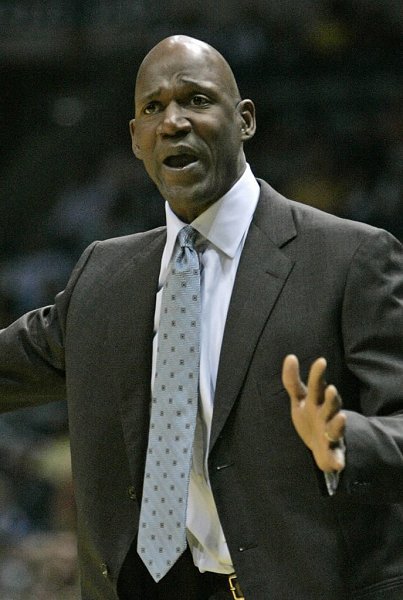
As the Oregonian reported today, I am involved with ex-Blazer Terry Porter and two other local guys in an effort to raise the capital necessary to buy the Trailblazers and keep the team in Portland.
We've been working on this deal for about six weeks, quietly putting the pieces in place until we could make the public announcement that we are seeking local investors.
The Blazers are too important to this town to just sit back and allow them to leave town. This city was once head-over-heels in love with the Blazers, and it can be again.
Who better to lead them back to their former glory than the one player who more than any other symbolizes what Portland fell in love with about the team during their heyday?
We have lined up $100 million in debt financing for the purchase, contingent upon raising significant local investor equity capital to round out the purchase. Terry will be in town next week to meet with prospective investors.
We met on Tuesday with NBA Commissioner David Stern to let him know our plans. It was clear to me at the meeting that Stern really wants a resolution to the Blazer problem, and that he would be perfectly happy to work with us provided we can raise the local investor equity necessary to buy the team.
The premise behind a Terry Porter led purchase is that Portland will once again support the Blazers if the players have good character, try hard every night, become part of the community, and respect the fans and the game. In any organization, the personnel tend to reflect the values and the character of its leader. Terry's team will reflect his character.
Terry will say to the people of Portland: "I pledge to put a team on the court that you can respect. We may not win right away - that will take time. But I will field a team that earns your trust. We will not ask the city for any public subsidy. The only public support we ask is to come back to the Rose Garden and support our team. Together we can BRING BACK RIP CITY!
We've put together a little web site where people can express their support of Terry Porter buying the team. Please give it a click and leave your name in support.
As the Oregonian reported, finding the local equity to make this happen is a difficult task. Terry is committed to doing everything he can to keep the Blazers in Portland. He's been personally calling several dozen prominent local people and businesses to ask them to attend a meeting next week where he will present the details of the proposal.
I've had occasion in my life to spend a lot of time around sports celebrities. I can say without exaggeration that Terry Porter is in a league of his own. He is humble, smart, charming, funny and willing to work hard. All the qualities that Portland came to know of him when he lived and played here -- they are absolutely true. They aren't just image - Terry Porter IS a class act in every sense of the word and I consider it to be a privilege to be working with him on this effort.
I'll post updates on our progress on this blog. Go to the website and join the effort.
Help Terry BRING BACK RIP CITY!
Wednesday, April 12, 2006
A bias against academic rigor
I've written a lot about the mindset of the "progressive education philosophy."
Among the central tenets is that academic rigor is to be avoided because learning must be fun.Joe Terry Olsenon, a retired Portland teacher turned education blogger gives us a great example of this viewpoint in a recent blog post.
He laments the trend toward bringing academic rigor to kindergarten classes, saying:
"It's a sad day ... when academic rigor seeps into the kindergarten classroom, and the joy of learning seeps out."
There it is: academic rigor means the joy of learning is gone. That explains the progressive education establishment's longstanding attack on traditional academic content and delivery.
I would like Olsenon to visit one of my Arthur Academies, where we teach kindergartners to read by providing them a rigorous program in directly taught phonics. He would see very excited children in small groups, led by a teacher, happily participating in the day's lesson.
Each day they learn another precisely calibrated morsel of skill and knowledge that build upon each other to form the foundation of reading fluency. They are having fun.
They are succeeding, and learning to read. And they love it. Learning is fun for them.
It is a far cry from what Olsen obviously thinks of a kindergarten classroom that focuses on academics. He apparently thinks that children can only be having fun and enjoy learning when they are discovering things on their own through play and activities.
In other words, when they aren't being taught anything.
It is an interesting viewpoint, but sadly it is pervasive in the public school system and it has done great damage to our children.
Among the central tenets is that academic rigor is to be avoided because learning must be fun.
He laments the trend toward bringing academic rigor to kindergarten classes, saying:
"It's a sad day ... when academic rigor seeps into the kindergarten classroom, and the joy of learning seeps out."
There it is: academic rigor means the joy of learning is gone. That explains the progressive education establishment's longstanding attack on traditional academic content and delivery.
I would like Ols
Each day they learn another precisely calibrated morsel of skill and knowledge that build upon each other to form the foundation of reading fluency. They are having fun.
They are succeeding, and learning to read. And they love it. Learning is fun for them.
It is a far cry from what Olsen obviously thinks of a kindergarten classroom that focuses on academics. He apparently thinks that children can only be having fun and enjoy learning when they are discovering things on their own through play and activities.
In other words, when they aren't being taught anything.
It is an interesting viewpoint, but sadly it is pervasive in the public school system and it has done great damage to our children.
Tuesday, April 04, 2006
Ballot Measure 1 Report out
The legislative committee charged with fulfilling the requirements of Ballot Measure 1 (which requires the legislature to "adequately" fund schools or issue a report explaining why they couldn't) is now complete.
The verdict: they legislature fell a scant $1.8 billion dollars short of giving the schools what the Quality Education Commission says is necessary to provide sufficient alms to all the school employee unions.
That's $1.8 billion more than the $5.3 billion allocated to K-12! They want 33% more than the schools received.
And what would we get if we shorted every other part of the budget to cough up the dough? The Quality Education Commission says that if we fund the schools to that level, then 90% of Oregon students would meet state standards. OK, fine. Certainly they'd be willing to give us some guarantee, right? Maybe fire every administrator whose school didn't meet the 90% benchmark?
Uh, well, no. Just give us the money. No guarantee on outcome. That according to Lynn Lundquist, the architect of the entire scam. Quoting from the Oregonian:
Lundquist "agreed that outcomes are not guaranteed, but he said the commission's list of resources and practices needed in quality schools is a good one. And if there's no relation between spending and outcomes, he said, why not cut school spending in half?"
Basically: "Trust us. Give us the money, but don't expect us to be accountable for it. What do you think we are - public servants? You got it wrong, taxpayers ..... you serve us."
And I especially love the suggestion of cutting school spending in half - that is precisely what charter schools have basically done - and many of them are indeed meeting the 90% goal, operating on roughly half of the per-student all funds budget of the local school district.
The verdict: they legislature fell a scant $1.8 billion dollars short of giving the schools what the Quality Education Commission says is necessary to provide sufficient alms to all the school employee unions.
That's $1.8 billion more than the $5.3 billion allocated to K-12! They want 33% more than the schools received.
And what would we get if we shorted every other part of the budget to cough up the dough? The Quality Education Commission says that if we fund the schools to that level, then 90% of Oregon students would meet state standards. OK, fine. Certainly they'd be willing to give us some guarantee, right? Maybe fire every administrator whose school didn't meet the 90% benchmark?
Uh, well, no. Just give us the money. No guarantee on outcome. That according to Lynn Lundquist, the architect of the entire scam. Quoting from the Oregonian:
Lundquist "agreed that outcomes are not guaranteed, but he said the commission's list of resources and practices needed in quality schools is a good one. And if there's no relation between spending and outcomes, he said, why not cut school spending in half?"
Basically: "Trust us. Give us the money, but don't expect us to be accountable for it. What do you think we are - public servants? You got it wrong, taxpayers ..... you serve us."
And I especially love the suggestion of cutting school spending in half - that is precisely what charter schools have basically done - and many of them are indeed meeting the 90% goal, operating on roughly half of the per-student all funds budget of the local school district.
Monday, April 03, 2006
Are they embarrassed? They should be.
I'm back from spring break, open the paper this morning to see the Oregonian continues to pretend it is a newspaper.
A front page article "analyzed" Portland School District spending, and found that: 1) employee benefits were higher than other districts, and 2) total spending was higher than similar sized districts.
"Wait," I thought..... haven't I seen or heard that somewhere before? Oh that's right! It is what I and others have been saying and writing for years on end! And further, it looked suspiciously like an article that featured about three weeks ago in the Portland Tribune.
For years on end we have been told by the Oregonian that PPS is underfunded. That we must raise taxes to save the district. That people like me who think they have enough money are not worthy of taking seriously.
Now, after the dinky little Tribune shows them up so badly, they cough up their own "analysis," and put it on the front page as if it is news?
Pulleeeeeze.
It's a pattern we have seen from the Oregonian time and again. Just yesterday, a front page headline ran in the O that headlined: "Tram's price unrealistic from the get-go."
Oh really? You mean after months and months of Oregonian editorials saying the city must pay more for the cost overruns, after the blogosphere exposed the cost projection lies, the sham public process that ignored completely the neighborhood activists who directly challenged the cost estimates, the Oregonian now shouts a headline that the Tram's developers lied to everyone all along about what the thing would cost?
What is the Oregonian's part in perpretrating that lie? Where exactly do they take responsibility for pulling this expensive sham over on the public?
And why would they think they have any credibility remaining?
A front page article "analyzed" Portland School District spending, and found that: 1) employee benefits were higher than other districts, and 2) total spending was higher than similar sized districts.
"Wait," I thought..... haven't I seen or heard that somewhere before? Oh that's right! It is what I and others have been saying and writing for years on end! And further, it looked suspiciously like an article that featured about three weeks ago in the Portland Tribune.
For years on end we have been told by the Oregonian that PPS is underfunded. That we must raise taxes to save the district. That people like me who think they have enough money are not worthy of taking seriously.
Now, after the dinky little Tribune shows them up so badly, they cough up their own "analysis," and put it on the front page as if it is news?
Pulleeeeeze.
It's a pattern we have seen from the Oregonian time and again. Just yesterday, a front page headline ran in the O that headlined: "Tram's price unrealistic from the get-go."
Oh really? You mean after months and months of Oregonian editorials saying the city must pay more for the cost overruns, after the blogosphere exposed the cost projection lies, the sham public process that ignored completely the neighborhood activists who directly challenged the cost estimates, the Oregonian now shouts a headline that the Tram's developers lied to everyone all along about what the thing would cost?
What is the Oregonian's part in perpretrating that lie? Where exactly do they take responsibility for pulling this expensive sham over on the public?
And why would they think they have any credibility remaining?
Wednesday, March 22, 2006
School Funding Lawsuit
I wrote the following in this month's BrainstormNW column. The news of the suit landed yesterday, announced by an organization headed up by Paul Kelly, former Nike chief counsel and long time school funding advocate. I'm going to dig around a bit and see if I can find who is funding this new group. I'll be shocked when I find that the OEA is funding them.
School Funding Fight Goes to Court
School funding activists are just about to take their fight to a different arena in their never ending quest to get more state general fund dollars into education: the courts. A newly created group, called the Oregon School Funding Defense Foundation, is planning to file a lawsuit to force the legislature to give more money to the schools.
After more than a decade not getting what they want out of the legislature, and after the voters have continually said no to their demands for tax increases, they plan to do what liberals always do – find a sympathetic judge.
School funding lawsuits are not a new development – they have been filed in 37 other states. But the suit planned for Oregon is different. In nearly all the other states, the lawsuits have been about “equity funding.” Most state constitutions (including Oregon’s) have language that implies there shouldn’t be huge discrepancies between school districts in how much money they have for schools.
Oregon never faced such a lawsuit, in part because Measure 5 shifted most of the school funding burden to the state, and various laws passed since then have basically equalized school funding for districts.
The lawsuit planned by this group (which is made up of a virtual “usual suspects” list of long time school funding advocates) is challenging the adequacy of school funding, not the equity. The suit will claim that Oregon’s constitution requires a certain level of funding that is not being met by the legislature’s K-12 budget allocation.
Their basis for the claim comes from Ballot Measure 1. Remember that one? Didn’t think so. Most people thought it was just a symbolic ornament that John Kitzhaber wanted put on the ballot so he could look as if he cared about schools. It passed easily.
The ballot measure amended the constitution to read: “The Legislative Assembly shall appropriate in each biennium a sum of money sufficient to ensure that the state's system of public education meets quality goals established by law…”
Just what are those “quality goals,” and who will define them? Remember the “Quality Education Model?” It was former House Speaker Lynn Lundquist’s project that defined the “optimal school model” and then calculated what it would cost to make every school in Oregon look like the model. The current price tag on the model is $7.2 billion, almost $2 billion more than the current K-12 allocation.
Well, while you weren’t watching, the legislature passed laws that basically defined “quality goals” for the purpose of defining school funding adequacy to be the “Quality Education Model.”
So there we have it. The constitution says funding must be adequate for certain goals to be met, and those goals require $7.2 billion.
When Ballot Measure 1 was being debated back in the 2000 election cycle, I was pretty lonely opposing such a feel good measure. (It passed in every county in the state, and got 66% statewide.) I argued that it was a power grab - the effect would be to take the question of school funding out of the legislature’s hands and give it to an unelected commission, the Quality Education Commission.
And that is precisely what this lawsuit, if successful, will bring about.
It took them six years to get the necessary framework in place to file the suit. They had to pass a few bills that fleshed out the constitutional language – bills that created the Quality Education Commission, and that codified the Quality Education Model as defining Oregon’s education goals.
For six years they’ve been busily grinding out all the requisite white papers and proceedings, all using public dollars, so now they can finally file the lawsuit that was the point of the entire exercise. Everything is in place.
If this lawsuit succeeds, then the legislature will no longer have a say in how much schools get from the budget. The number will be handed down by the unelected Quality Education Commission, and will be based on an entirely fabricated standard that emanates from the Quality Education Model, which has never had its own assumptions subjected to empirical scrutiny.
There is a silver lining here. By the time the lawsuit grinds its way to a conclusion, we can predict that the funding level required by the Quality Education Model will be even more laughably distant from any realistic level the state budget could allocate. It’s already about $2 billion higher than the current K-12 funding allocation.
The lawsuit could take three or four years. Assuming it succeeds, what will happen when the courts decide that the constitution requires an additional $3 or $4 billion be give to the schools?
But the real question is the question that is almost too late to be asked. It should have been asked in 2000 when Ballot Measure 1 was getting a free pass: are the courts the appropriate arena to decide the level of K-12 funding?
School Funding Fight Goes to Court
School funding activists are just about to take their fight to a different arena in their never ending quest to get more state general fund dollars into education: the courts. A newly created group, called the Oregon School Funding Defense Foundation, is planning to file a lawsuit to force the legislature to give more money to the schools.
After more than a decade not getting what they want out of the legislature, and after the voters have continually said no to their demands for tax increases, they plan to do what liberals always do – find a sympathetic judge.
School funding lawsuits are not a new development – they have been filed in 37 other states. But the suit planned for Oregon is different. In nearly all the other states, the lawsuits have been about “equity funding.” Most state constitutions (including Oregon’s) have language that implies there shouldn’t be huge discrepancies between school districts in how much money they have for schools.
Oregon never faced such a lawsuit, in part because Measure 5 shifted most of the school funding burden to the state, and various laws passed since then have basically equalized school funding for districts.
The lawsuit planned by this group (which is made up of a virtual “usual suspects” list of long time school funding advocates) is challenging the adequacy of school funding, not the equity. The suit will claim that Oregon’s constitution requires a certain level of funding that is not being met by the legislature’s K-12 budget allocation.
Their basis for the claim comes from Ballot Measure 1. Remember that one? Didn’t think so. Most people thought it was just a symbolic ornament that John Kitzhaber wanted put on the ballot so he could look as if he cared about schools. It passed easily.
The ballot measure amended the constitution to read: “The Legislative Assembly shall appropriate in each biennium a sum of money sufficient to ensure that the state's system of public education meets quality goals established by law…”
Just what are those “quality goals,” and who will define them? Remember the “Quality Education Model?” It was former House Speaker Lynn Lundquist’s project that defined the “optimal school model” and then calculated what it would cost to make every school in Oregon look like the model. The current price tag on the model is $7.2 billion, almost $2 billion more than the current K-12 allocation.
Well, while you weren’t watching, the legislature passed laws that basically defined “quality goals” for the purpose of defining school funding adequacy to be the “Quality Education Model.”
So there we have it. The constitution says funding must be adequate for certain goals to be met, and those goals require $7.2 billion.
When Ballot Measure 1 was being debated back in the 2000 election cycle, I was pretty lonely opposing such a feel good measure. (It passed in every county in the state, and got 66% statewide.) I argued that it was a power grab - the effect would be to take the question of school funding out of the legislature’s hands and give it to an unelected commission, the Quality Education Commission.
And that is precisely what this lawsuit, if successful, will bring about.
It took them six years to get the necessary framework in place to file the suit. They had to pass a few bills that fleshed out the constitutional language – bills that created the Quality Education Commission, and that codified the Quality Education Model as defining Oregon’s education goals.
For six years they’ve been busily grinding out all the requisite white papers and proceedings, all using public dollars, so now they can finally file the lawsuit that was the point of the entire exercise. Everything is in place.
If this lawsuit succeeds, then the legislature will no longer have a say in how much schools get from the budget. The number will be handed down by the unelected Quality Education Commission, and will be based on an entirely fabricated standard that emanates from the Quality Education Model, which has never had its own assumptions subjected to empirical scrutiny.
There is a silver lining here. By the time the lawsuit grinds its way to a conclusion, we can predict that the funding level required by the Quality Education Model will be even more laughably distant from any realistic level the state budget could allocate. It’s already about $2 billion higher than the current K-12 funding allocation.
The lawsuit could take three or four years. Assuming it succeeds, what will happen when the courts decide that the constitution requires an additional $3 or $4 billion be give to the schools?
But the real question is the question that is almost too late to be asked. It should have been asked in 2000 when Ballot Measure 1 was getting a free pass: are the courts the appropriate arena to decide the level of K-12 funding?
Tuesday, March 21, 2006
Oregonian Watch
I predicted some time ago that we were going to be treated to a regular stream of "invented" news stories by the Oregonian, all of which would be some variant on the theme "government needs more money."
We got another one today. Front page story on how Oregon is "falling behind" other states in public funds for pre-school, and how important pre-school is to get kids off on the right foot.
In their proud tradition, there isn't any news in the story. There was no national study that triggered the reporting, no proposal announced by a governor candidate or the like. Rather, the Oregonian has a point it wants to make, and in the absence of news on the issue, it just writes a story that supports its position.
The reader is supposed to read the article and then worry that we are hurting children by not paying for as much pre-school as other states. More money would of course solve the "problem."
The article refers to research that shows a dollar invested in pre-school saves more than $12 in social servces needed later on. It didn't, however, make any mention of the significant body of research that shows the Head Start pre-school program has little if any lasting effect on student achievement and other indicators. Abigail Thernstrom, Vice Chair of the US Commission on Civil Rights evaluated that research in her book "No Excuses."
I have a better idea. Rather than raise more tax money to pay for pre-schools that working mothers send their kids to, why not reduce taxes so families can afford to have one parent stay home with their kids until they are school age?
It seems as if the government class wants kids to be in their schools at the earliest age possible. With the well-known deficiencies in our public school system, why would we be looking to expand their reach and mission to pre-schoolers?
We got another one today. Front page story on how Oregon is "falling behind" other states in public funds for pre-school, and how important pre-school is to get kids off on the right foot.
In their proud tradition, there isn't any news in the story. There was no national study that triggered the reporting, no proposal announced by a governor candidate or the like. Rather, the Oregonian has a point it wants to make, and in the absence of news on the issue, it just writes a story that supports its position.
The reader is supposed to read the article and then worry that we are hurting children by not paying for as much pre-school as other states. More money would of course solve the "problem."
The article refers to research that shows a dollar invested in pre-school saves more than $12 in social servces needed later on. It didn't, however, make any mention of the significant body of research that shows the Head Start pre-school program has little if any lasting effect on student achievement and other indicators. Abigail Thernstrom, Vice Chair of the US Commission on Civil Rights evaluated that research in her book "No Excuses."
I have a better idea. Rather than raise more tax money to pay for pre-schools that working mothers send their kids to, why not reduce taxes so families can afford to have one parent stay home with their kids until they are school age?
It seems as if the government class wants kids to be in their schools at the earliest age possible. With the well-known deficiencies in our public school system, why would we be looking to expand their reach and mission to pre-schoolers?
Friday, March 17, 2006
The Oregonian excludes Dave Lister
In yesterday's "InPortland" pullout section of the Oregonian, there was a full page profile of three candidates for Eric Sten's seat on city council. Each had full-body photos with wrapped text that consisted of the candidate's answers to a bunch of whimsical questions the Oregonian had asked of them.
The candidates profiled were Emily Boyles, Ginny Burdick and Eric Sten. Notably absent from the profiles was Dave Lister.
I wrote to the reporter covering the race to give her the business. She responded with the typical explanation: "We can't cover everybody"... "He hasn't raised much money" ... "It was a hard decision" ... blah blah blah.
Of course, Dave Lister is the only candidate in the race who opposes all the policies that the Oregonian has supported all these years: light rail, urban renewal, "new urbanism," the tram, etc.
Each of the other three candidates who were graced with the implied legitimacy of the Oregonian profile can be described as "left, lefter and leftest." God forbid we actually have a debate over ideology in a city council race. We certainly can't have a voice for small business, lower taxes and ending wasteful city spending in a city council race.
Dave Lister has written a column on Portland issues for BrainstormNW magazine for two years. He has served for years on the city's Small Business Advisory Committee. He has owned and operated a small business for a couple decades. He is raising money for his campaign, employs paid campaign staff, and has been invited to participate in the City Club's debate next Friday. He has been endorsed by Jack Bogdanski, who runs Portland's most well read blog (bojack.org)
But the Oregonian doesn't think this qualifies Dave Lister as a candidate legitimate enough to be covered on par with Emily Boyles, who as far as I can tell has done little other than get 1000 people to give her $5 so she can spend $150K of taxpayer money on her campaign.
The Oregonian really showed its stripes on this one. Oh sure they'll try to explain it away, but bottom line they don't want Dave's voice heard, and so they will do nothing to tell voters about him.
Is it any wonder why the Oregonian's reputation is sliding so far, so fast these days?
They should understand that gone are the days when they can make this kind of call with impunity. They don't get it yet, but "new media" is big enough and powerful enough that when establishment media pulls this kind of a stunt they pay a price.
Just as CBS didn't get away with publishing fake documents, because the bloggers tore them apart like so many pirhana feasting on a dead carcass of an ox floating downstream, the Oregonian can't define any longer who is and who is not a legitimate political voice.
Dave Lister is not just a legitimate voice - his common sense views about all the craziness happening in Portland's political arena have a following among political liberals and moderates as well as conservatives.
Maybe that is what the Oregonian is worried about!
The candidates profiled were Emily Boyles, Ginny Burdick and Eric Sten. Notably absent from the profiles was Dave Lister.
I wrote to the reporter covering the race to give her the business. She responded with the typical explanation: "We can't cover everybody"... "He hasn't raised much money" ... "It was a hard decision" ... blah blah blah.
Of course, Dave Lister is the only candidate in the race who opposes all the policies that the Oregonian has supported all these years: light rail, urban renewal, "new urbanism," the tram, etc.
Each of the other three candidates who were graced with the implied legitimacy of the Oregonian profile can be described as "left, lefter and leftest." God forbid we actually have a debate over ideology in a city council race. We certainly can't have a voice for small business, lower taxes and ending wasteful city spending in a city council race.
Dave Lister has written a column on Portland issues for BrainstormNW magazine for two years. He has served for years on the city's Small Business Advisory Committee. He has owned and operated a small business for a couple decades. He is raising money for his campaign, employs paid campaign staff, and has been invited to participate in the City Club's debate next Friday. He has been endorsed by Jack Bogdanski, who runs Portland's most well read blog (bojack.org)
But the Oregonian doesn't think this qualifies Dave Lister as a candidate legitimate enough to be covered on par with Emily Boyles, who as far as I can tell has done little other than get 1000 people to give her $5 so she can spend $150K of taxpayer money on her campaign.
The Oregonian really showed its stripes on this one. Oh sure they'll try to explain it away, but bottom line they don't want Dave's voice heard, and so they will do nothing to tell voters about him.
Is it any wonder why the Oregonian's reputation is sliding so far, so fast these days?
They should understand that gone are the days when they can make this kind of call with impunity. They don't get it yet, but "new media" is big enough and powerful enough that when establishment media pulls this kind of a stunt they pay a price.
Just as CBS didn't get away with publishing fake documents, because the bloggers tore them apart like so many pirhana feasting on a dead carcass of an ox floating downstream, the Oregonian can't define any longer who is and who is not a legitimate political voice.
Dave Lister is not just a legitimate voice - his common sense views about all the craziness happening in Portland's political arena have a following among political liberals and moderates as well as conservatives.
Maybe that is what the Oregonian is worried about!
Monday, March 13, 2006
A good example of a campaign lie
I'm supporting Ron Saxton for governor, but I've said all along that we have three terrific candidates running, each with his own strengths, and that I would support any of them in November.
Because I want a Republican governor, I have tried to only stress the positive things about my chosen candidate, and have refrained from tearing down either of the others on my radio show, BrainstormNW column, this blog, and other public utterances.
That said, I don't think it is out of bounds to point out when one candidate is stretching the truth so far as to make it unrecognizable, as was reported in the Oregonian today.
The story is about the kicker, and each candidate's position on whether to keep it or send it back to the taxpayers. I'm assuming that what the O reported is accurate here. If not, I am perfectly willing to stand corrected.
The Mannix campaign, according to the O, is telling people that Ron Saxton voted to keep the kicker.
Here is the actual text of the story:
On the Republican side, Kevin Mannix's campaign staff pilloried Ron Saxton for what they claim is an election-year turnaround, saying Saxton supported spending the kicker on schools when he was Portland School Board chairman but opposes the idea now.
"Saxton voted to have state government -- rather than taxpayers -- keep state tax 'kicker' refunds," according to a flier Mannix campaign workers hand out at events. As evidence, the flier cites a Nov. 22, 1999, Portland School Board resolution.
What the resolution actually supported was voluntary donations from parents who wanted their kicker refund check to go to schools. Saxton has never favored repeal of the kicker, said his campaign manager, Felix Schein.
That's about as misleading as it gets.
Look - I have no problem with Kevin Mannix criticising Ron Saxton's record. That is fair game, even if the 11thamendment Commandment is in play. But to completely mischaracterize Saxton's record is another matter entirely.
Supporting voluntary contributions of the kicker returns is not the same thing as voting to keep the kicker. It isn't even close, and the Mannix camp knows it.
Mannix doesn't do himself any favors by making such obviously false claims. If he wants voters to trust him, he should stick to the truth.
So, I will say it first:
Knock it off, Kevin.
Because I want a Republican governor, I have tried to only stress the positive things about my chosen candidate, and have refrained from tearing down either of the others on my radio show, BrainstormNW column, this blog, and other public utterances.
That said, I don't think it is out of bounds to point out when one candidate is stretching the truth so far as to make it unrecognizable, as was reported in the Oregonian today.
The story is about the kicker, and each candidate's position on whether to keep it or send it back to the taxpayers. I'm assuming that what the O reported is accurate here. If not, I am perfectly willing to stand corrected.
The Mannix campaign, according to the O, is telling people that Ron Saxton voted to keep the kicker.
Here is the actual text of the story:
On the Republican side, Kevin Mannix's campaign staff pilloried Ron Saxton for what they claim is an election-year turnaround, saying Saxton supported spending the kicker on schools when he was Portland School Board chairman but opposes the idea now.
"Saxton voted to have state government -- rather than taxpayers -- keep state tax 'kicker' refunds," according to a flier Mannix campaign workers hand out at events. As evidence, the flier cites a Nov. 22, 1999, Portland School Board resolution.
What the resolution actually supported was voluntary donations from parents who wanted their kicker refund check to go to schools. Saxton has never favored repeal of the kicker, said his campaign manager, Felix Schein.
That's about as misleading as it gets.
Look - I have no problem with Kevin Mannix criticising Ron Saxton's record. That is fair game, even if the 11th
Supporting voluntary contributions of the kicker returns is not the same thing as voting to keep the kicker. It isn't even close, and the Mannix camp knows it.
Mannix doesn't do himself any favors by making such obviously false claims. If he wants voters to trust him, he should stick to the truth.
So, I will say it first:
Knock it off, Kevin.
Monday, March 06, 2006
Atkinson Blogger is making things up
All the Atkinson bloggers are posting their updates on Dorchester, and one of them, run by a guy I don't know (or at least I don't know if I know him) has posted a bald-faced lie about me.
I added a comment to false post on his blog, challenging his blatantly false assertion, and apparently he has blocked it from appearing. It's been more than a half day since I posted it. When I did it, there was a message that said the post would appear after the blogger approved it.
Interesting, I thought. Most every other blog I've posted to immediately displays the comments. I wonder if he will censor it?
Well, it hasn't appeared.
Background: I asked all the Governor candidates to come on my radio show that I was broadcasting from the Dorchester Conference Sunday morning. While on a break from the show, I asked Jason to come on, and he told me he wasn't at all happy with KXL and he didn't think he'd come on.
I said "What have I ever said that was negative about you? He said he didn't know.
When I got back on the air, I mentioned to my co-host that we'd be having all the governor candidates but wasn't sure if Jason was coming on. Marc Abrams, my co-host, said something like "He's passing up the chance to reach our audience for free?"
A few minutes later, Jason came to the booth, sat down, and we had our interview. It was perfectly cordial. Marc did most of the interviewing, as is our practice - we usually let the liberal ask the conservative guests questions and vice versa.
That was that.
Here's how the blogger Max Redline characterized the interview:
Atkinson takes another hit on KXL
The Kremer&Abrhams show is on, and Kevin's about to put in an appearance. Atkinson was asked as well, and apparently said that he might appear - this was greeted with derision by Kremer, who cracked that that attitude pretty well tells him all he needs to know about the Atkinson campaign.
This is blatantly false, and I told him so. I said no such thing. I was not derisive in my tone with Jason in the interview and I did not say anything like what the blogger said.
In the comment he apparently censored, I pointed this out.
It is one thing for a guy to get it wrong - people can make mistakes, hear what they want to hear, misinterpret, or attribute a comment to the wrong person. That can be done in good faith.
But to have the falsehood pointed out and then block the correction from his blog - well, that speaks to the integrity of the blogger.
So, I know not who this guy is, but there's no reason to take anything he says seriously.
I added a comment to false post on his blog, challenging his blatantly false assertion, and apparently he has blocked it from appearing. It's been more than a half day since I posted it. When I did it, there was a message that said the post would appear after the blogger approved it.
Interesting, I thought. Most every other blog I've posted to immediately displays the comments. I wonder if he will censor it?
Well, it hasn't appeared.
Background: I asked all the Governor candidates to come on my radio show that I was broadcasting from the Dorchester Conference Sunday morning. While on a break from the show, I asked Jason to come on, and he told me he wasn't at all happy with KXL and he didn't think he'd come on.
I said "What have I ever said that was negative about you? He said he didn't know.
When I got back on the air, I mentioned to my co-host that we'd be having all the governor candidates but wasn't sure if Jason was coming on. Marc Abrams, my co-host, said something like "He's passing up the chance to reach our audience for free?"
A few minutes later, Jason came to the booth, sat down, and we had our interview. It was perfectly cordial. Marc did most of the interviewing, as is our practice - we usually let the liberal ask the conservative guests questions and vice versa.
That was that.
Here's how the blogger Max Redline characterized the interview:
Atkinson takes another hit on KXL
The Kremer&Abrhams show is on, and Kevin's about to put in an appearance. Atkinson was asked as well, and apparently said that he might appear - this was greeted with derision by Kremer, who cracked that that attitude pretty well tells him all he needs to know about the Atkinson campaign.
This is blatantly false, and I told him so. I said no such thing. I was not derisive in my tone with Jason in the interview and I did not say anything like what the blogger said.
In the comment he apparently censored, I pointed this out.
It is one thing for a guy to get it wrong - people can make mistakes, hear what they want to hear, misinterpret, or attribute a comment to the wrong person. That can be done in good faith.
But to have the falsehood pointed out and then block the correction from his blog - well, that speaks to the integrity of the blogger.
So, I know not who this guy is, but there's no reason to take anything he says seriously.
Thursday, March 02, 2006
Proof that Randy Leonard hates black people
Randy Leonard and I have a running joke that stems from the radio shows we have done together. Randy's debate style is to engage in the issue for a certain period of time, only to suddenly launch a nuclear attack.
For instance, we might be talking about school spending, debating where the excesses are, PERS, health insurance, etc., and at some point Randy says: "Rob, why do you hate children?"
The first few times I was irritated, since it is such an obvious attempt at over the top demagoguery. But I soon learned with Randy just to do it back to him.
So when we would talk about minimum wage, which cuts off the lowest rungs of the ecomic ladder for the least skilled amongst us (and disproportionately harms black teenagers,) I would just ask: "Randy, why do you hate black people?"
We both usually start laughing about that time. We actually like each other. I disagree with Randy on almost everything, but I like Randy. The world is a much more interesting place with him in it.
Recently, however, Randy gave us ipso-facto proof that he does indeed hate black people! I would have never believed it - but it must be true.
I read in the Willamette Week today that the cell phone tax Randy is pushing has a far greater impact on blacks and Hispanics than it does white people! That is right - Randy Leonard is trying to save the schools on the back of black people!
I know it's hard to believe.
Randy, oh Randy: why do you hate black people?
For instance, we might be talking about school spending, debating where the excesses are, PERS, health insurance, etc., and at some point Randy says: "Rob, why do you hate children?"
The first few times I was irritated, since it is such an obvious attempt at over the top demagoguery. But I soon learned with Randy just to do it back to him.
So when we would talk about minimum wage, which cuts off the lowest rungs of the ecomic ladder for the least skilled amongst us (and disproportionately harms black teenagers,) I would just ask: "Randy, why do you hate black people?"
We both usually start laughing about that time. We actually like each other. I disagree with Randy on almost everything, but I like Randy. The world is a much more interesting place with him in it.
Recently, however, Randy gave us ipso-facto proof that he does indeed hate black people! I would have never believed it - but it must be true.
I read in the Willamette Week today that the cell phone tax Randy is pushing has a far greater impact on blacks and Hispanics than it does white people! That is right - Randy Leonard is trying to save the schools on the back of black people!
I know it's hard to believe.
Randy, oh Randy: why do you hate black people?
Wednesday, March 01, 2006
My son, on tolerance
My son is 15, a freshman at Lake Oswego High School. He likes to debate political issues and other things with friends and classmates.
Several times lately he's come home with stories about class discussions about "tolerance." He says the overwhelming consensus among his schoolmates is that tolerance means no one should ever judge anybody else. He's often laughed at the self-refuting nature of the notion of tolerance (should we tolerate intolerance?) and the other day, he wrote the following, which I thought was perfectly worthy of being posted on my blog:
What is tolerance?
Why is it that we aspire to nullify our opinions when our opinions are all we have? After all tolerance only morphs itself into the hatred of intolerance, at which point everyone is pressured into tolerance through intolerance.
Therefore a feigned tolerance reigns over the general populace who fear being alienated as outsiders.
Opinions seperate us from animals. Animals have no opinions and and cannot follow a logical path. So why attempt to nullify our opinions which in effect gives animals an equal station to humans?
Because opinions make us individuals, the admission of equal correctness of all opinions creates a uniform society in which if you have an opinion and therefore are an individual you are not tolerated. That is a communist state.
I dont advocate fighting over every small difference in opinion, but I do protest the notion that it is somehow wrong to hold an opinion on another's life style.
For those who say "who are you to judge?" - I am a human being, of body and mind capable of logical thought.
That alone permits me to judge.
Several times lately he's come home with stories about class discussions about "tolerance." He says the overwhelming consensus among his schoolmates is that tolerance means no one should ever judge anybody else. He's often laughed at the self-refuting nature of the notion of tolerance (should we tolerate intolerance?) and the other day, he wrote the following, which I thought was perfectly worthy of being posted on my blog:
What is tolerance?
Why is it that we aspire to nullify our opinions when our opinions are all we have? After all tolerance only morphs itself into the hatred of intolerance, at which point everyone is pressured into tolerance through intolerance.
Therefore a feigned tolerance reigns over the general populace who fear being alienated as outsiders.
Opinions seperate us from animals. Animals have no opinions and and cannot follow a logical path. So why attempt to nullify our opinions which in effect gives animals an equal station to humans?
Because opinions make us individuals, the admission of equal correctness of all opinions creates a uniform society in which if you have an opinion and therefore are an individual you are not tolerated. That is a communist state.
I dont advocate fighting over every small difference in opinion, but I do protest the notion that it is somehow wrong to hold an opinion on another's life style.
For those who say "who are you to judge?" - I am a human being, of body and mind capable of logical thought.
That alone permits me to judge.
Sunday, February 26, 2006
Bush, Kulongoski, and renewable fuels
President Bush says we are addicted to foreign oil, and he wants to reduce our dependence on it. Governor Kulongoski says he wants to increase 25% of Oregon's fuel consumption to be renewable energy.
Both are misguided; both misunderstand basic economics.
We hear a lot about the risk of depending on the middle east for oil. When we buy oil from Arab nations we fill the government coffers with dollars that in some cases are used by those governments to fund terrorism. If we cut our consumption by 10%, I've heard it said, we could get by without oil from the middle east, and bring them to their knees economically.
It wont work. If we reduce oil consumption, the global demand for oil will obviously go down, and the price will go down a bit as well. So would it have much effect on Arab oil nations? No.
Arab nations are the world's lowest cost producer of oil. A lower global oil price would only hurt the higher cost producers, who might find the new equilibrium price of oil above their production costs. Arab nations would sell the same amount of oil, but perhaps at a slightly lower price.
So, if the point of reducing our dependence is to reduce the cash flow of terror sponsoring Arab nations, it simply won't work. The middle east produces oil for about $5 a barrel. Reduce global demand all you want, the Arab nations will be the last man standing becuase they are the lowest cost producer.
If the point is to make sure our economy isn't vulnerable to political events in the middle east that might disupt oil supply, it also doesn't make much sense. So we are supposed to consume higher-priced domestic energy sources rather than Arab oil in case the Arabs stop selling their oil to us?
It doesn't make economic sense, because every form of alternative energy costs more than oil, so the only way they get produced is with government subsidies. Subsidies are bad policy.
Take ethanol, as an example. Ethanol production in the U.S. gets subsidized to the tune of 50 cents a gallon. Guess what the major input in the production of ethanol is? Yup, energy - oil. Lots of oil involved in the planting and harvest of the corn, transporting it and distilling it into ethanol. Studies have been conducted that add up all the oil involved in ethanol production and found that each gallon of ethanol uses more than a gallon of oil!
So subsidizing ethanol production actually INCREASES our demand for oil!
But, you say, if we subsidize the production now, then we will figure out new and better and more efficient ways to produce it, and we will be ready to convert if some event in the middle east cuts raises the price of oil.
That sounds right, but the subsidy is not necessary, unless you believe in the all-knowing ability of government to correctly anticipate future technological advancements. How do we know ethanol will be the best alternative energy source? How about wind, solar, geothermal, natural gas, or cold fusion? Nobody knows what technology will be developed on any of these things. For the government to choose now and subsidize one or more of them requires a much greater faith in the efficacy of political decision-making than I have (or than is warranted by its track record.)
The oil industry is extremely profitable. There is a tremendous incentive for private industry to pursue alternative energy technology. As a general rule, if there exists a huge incentive to engage in an activity, no subsidy is required.
So why do politicians like Bush and Kulongoski love to subsidize alternative fuels? Well, the agricultural industry has a very effective lobby. They get billions each year in farm subsidies of one sort or another.
This is just another.
Both are misguided; both misunderstand basic economics.
We hear a lot about the risk of depending on the middle east for oil. When we buy oil from Arab nations we fill the government coffers with dollars that in some cases are used by those governments to fund terrorism. If we cut our consumption by 10%, I've heard it said, we could get by without oil from the middle east, and bring them to their knees economically.
It wont work. If we reduce oil consumption, the global demand for oil will obviously go down, and the price will go down a bit as well. So would it have much effect on Arab oil nations? No.
Arab nations are the world's lowest cost producer of oil. A lower global oil price would only hurt the higher cost producers, who might find the new equilibrium price of oil above their production costs. Arab nations would sell the same amount of oil, but perhaps at a slightly lower price.
So, if the point of reducing our dependence is to reduce the cash flow of terror sponsoring Arab nations, it simply won't work. The middle east produces oil for about $5 a barrel. Reduce global demand all you want, the Arab nations will be the last man standing becuase they are the lowest cost producer.
If the point is to make sure our economy isn't vulnerable to political events in the middle east that might disupt oil supply, it also doesn't make much sense. So we are supposed to consume higher-priced domestic energy sources rather than Arab oil in case the Arabs stop selling their oil to us?
It doesn't make economic sense, because every form of alternative energy costs more than oil, so the only way they get produced is with government subsidies. Subsidies are bad policy.
Take ethanol, as an example. Ethanol production in the U.S. gets subsidized to the tune of 50 cents a gallon. Guess what the major input in the production of ethanol is? Yup, energy - oil. Lots of oil involved in the planting and harvest of the corn, transporting it and distilling it into ethanol. Studies have been conducted that add up all the oil involved in ethanol production and found that each gallon of ethanol uses more than a gallon of oil!
So subsidizing ethanol production actually INCREASES our demand for oil!
But, you say, if we subsidize the production now, then we will figure out new and better and more efficient ways to produce it, and we will be ready to convert if some event in the middle east cuts raises the price of oil.
That sounds right, but the subsidy is not necessary, unless you believe in the all-knowing ability of government to correctly anticipate future technological advancements. How do we know ethanol will be the best alternative energy source? How about wind, solar, geothermal, natural gas, or cold fusion? Nobody knows what technology will be developed on any of these things. For the government to choose now and subsidize one or more of them requires a much greater faith in the efficacy of political decision-making than I have (or than is warranted by its track record.)
The oil industry is extremely profitable. There is a tremendous incentive for private industry to pursue alternative energy technology. As a general rule, if there exists a huge incentive to engage in an activity, no subsidy is required.
So why do politicians like Bush and Kulongoski love to subsidize alternative fuels? Well, the agricultural industry has a very effective lobby. They get billions each year in farm subsidies of one sort or another.
This is just another.
Friday, February 17, 2006
Jack Ohman come home
I'm a fan of Jack Ohman, the Oregonian's nationally syndicated cartoonist. I think Jack is on the short list of political cartoonists who have not yet won the Pulitzer. I won't be surprised when he wins it.
Ohman approaches issues from a decidedly different perspective than me, but I have always enjoyed his wit and cleverness that came through so clearly in his cartoons. He's extraordinarily talented.
That said, I think Ohman has been on a long dry spell, in which his cartoons have become disappointingly predictable. It's not just that the message of his cartoons has failed to surprise of late, but the cleverness that distinguished him from his less talented peers has seemed to give way to a daily drumbeat of the same unimaginative, shopworn images, whether his subject is of local or national interest.
I can't quite put my finger on it, but it seems as if there used to be a certain underlying joy in the way he did his work. Even if he was characterizing his target in a severely negative light, there was a certain lightness of being in the way he did it, a humor, or a unique way of presenting his point that often made me marvel at his craft, even as I disagreed vehemently with it.
His cartoons rarely seemed mean-spirited, and the statement his images were almost always sophisticated - the equivalent of a serious intellectual argument rather than a sound-bite.
I've always considered political cartoons to be one of the most powerful of all mediums. I've wished I had the talent to do them well. Because of the unique forum a political cartoonist has -- with the ability to combine an image with text to drive home a point, a cartoonist is able to take a political argument directly from premise to conclusion without the need for the intermediate step that regular columnists must forge - logical argument.
So cartooning is extraordinarily powerful. In a matter of a few brief reader's seconds a cartoonist can drive home a point that would take 700 words for a political columnist - and the cartoonist doesn't have to have anywhere near the intellectual consistency required of the columnist.
In my view, this is a huge responsibility for the cartoonist. Since the medium almost begs cartoonist to make stereotype part of their stock and trade, I think they have to be very careful to avoid descending into putting forth images that trade off the most convenient examples.
And that is where I think Ohman has gotten intellectually lazy. It seens his cartoons have for the last few years so regularly just made the most obvious sterotypical points: "Bush is dumb," or "Republicans are racist," or "Schools don't have enough money."
It has gotten tiresome, and it is too bad, because I remember many times truly enjoying Ohman cartoons that I completely disagreed with but which I thought were brilliantly done. On more than one occasion I wrote him to tell him just that.
I'm hoping that he can get back to his former self. The world is a much more interesting place with Jack Ohman on the top of his game. He's a truly talented guy.
Honestly, we are lucky to have a cartoonist as talented as Jack Ohman working out of our local paper. I hope he can snap out of whatever mid-career slump he's found himself in, and recapture his rapier-like wit (even if it is mostly aimed at people on my side of the political arena.)
Ohman approaches issues from a decidedly different perspective than me, but I have always enjoyed his wit and cleverness that came through so clearly in his cartoons. He's extraordinarily talented.
That said, I think Ohman has been on a long dry spell, in which his cartoons have become disappointingly predictable. It's not just that the message of his cartoons has failed to surprise of late, but the cleverness that distinguished him from his less talented peers has seemed to give way to a daily drumbeat of the same unimaginative, shopworn images, whether his subject is of local or national interest.
I can't quite put my finger on it, but it seems as if there used to be a certain underlying joy in the way he did his work. Even if he was characterizing his target in a severely negative light, there was a certain lightness of being in the way he did it, a humor, or a unique way of presenting his point that often made me marvel at his craft, even as I disagreed vehemently with it.
His cartoons rarely seemed mean-spirited, and the statement his images were almost always sophisticated - the equivalent of a serious intellectual argument rather than a sound-bite.
I've always considered political cartoons to be one of the most powerful of all mediums. I've wished I had the talent to do them well. Because of the unique forum a political cartoonist has -- with the ability to combine an image with text to drive home a point, a cartoonist is able to take a political argument directly from premise to conclusion without the need for the intermediate step that regular columnists must forge - logical argument.
So cartooning is extraordinarily powerful. In a matter of a few brief reader's seconds a cartoonist can drive home a point that would take 700 words for a political columnist - and the cartoonist doesn't have to have anywhere near the intellectual consistency required of the columnist.
In my view, this is a huge responsibility for the cartoonist. Since the medium almost begs cartoonist to make stereotype part of their stock and trade, I think they have to be very careful to avoid descending into putting forth images that trade off the most convenient examples.
And that is where I think Ohman has gotten intellectually lazy. It seens his cartoons have for the last few years so regularly just made the most obvious sterotypical points: "Bush is dumb," or "Republicans are racist," or "Schools don't have enough money."
It has gotten tiresome, and it is too bad, because I remember many times truly enjoying Ohman cartoons that I completely disagreed with but which I thought were brilliantly done. On more than one occasion I wrote him to tell him just that.
I'm hoping that he can get back to his former self. The world is a much more interesting place with Jack Ohman on the top of his game. He's a truly talented guy.
Honestly, we are lucky to have a cartoonist as talented as Jack Ohman working out of our local paper. I hope he can snap out of whatever mid-career slump he's found himself in, and recapture his rapier-like wit (even if it is mostly aimed at people on my side of the political arena.)
Wednesday, February 15, 2006
Visioning Project: giveaways to the usual suspects
Did you know that Mayor Potter is giving out $200,000 in "Community Grants" to non profit organizations so they can ask their constituents a list of questions about their vision for Portland?
They received 142 applications for the grants, which range from $1,000 to $15,000. I spoke to someone today who went to the application meeting. I'm told that all the usual suspects were there - almost all of the organizations represented were of one or another liberal stripe.
So that's the plan... get all the liberal groups to ask their "communities" what they want Portland to be in 30 years. Guess whose vision dominates the discussions?
It will be interesting when they release the list of who got the grants. That will go a long way toward explaining what "vision" the project tells us Portlanders want for the city.
I'm going to go out on a limb here and predict that the vision that comes out of this process is that 1) we need more light rail; 2) we need more bike lanes; 3) etc.
They received 142 applications for the grants, which range from $1,000 to $15,000. I spoke to someone today who went to the application meeting. I'm told that all the usual suspects were there - almost all of the organizations represented were of one or another liberal stripe.
So that's the plan... get all the liberal groups to ask their "communities" what they want Portland to be in 30 years. Guess whose vision dominates the discussions?
It will be interesting when they release the list of who got the grants. That will go a long way toward explaining what "vision" the project tells us Portlanders want for the city.
I'm going to go out on a limb here and predict that the vision that comes out of this process is that 1) we need more light rail; 2) we need more bike lanes; 3) etc.
Westlund's Candidacy: Who does it hurt?
So Ben Westlund is no longer a Republican, and will run for governor as an independent. So the question is: will he draw more votes from the Democrat or the Republican nominee?
It's a close call, but I think an argument can be made that Westlund would draw more votes from Kulongoski (assuming he's the nominee.) Here's the reasoning:
Westlund is neither a fiscal or a social conservative. He's been out front trying to raise taxes, he supports a sales tax, and he was a co-sponsor of SB1000, the same sex marriage bill.
Why would a bunch of Republicans flock to him? I could see some moderate R's vote for an independent who was fiscally conservative and socially liberal, but Westlund is liberal on both.
Democrats, on the other hand, are very disenchanted with Kulongoski, and are looking for some alternative. I think they would find Westlund's positions very attractive.
It could be that Westlund's defection will be good for the Republican nominee.
Anybody?
It's a close call, but I think an argument can be made that Westlund would draw more votes from Kulongoski (assuming he's the nominee.) Here's the reasoning:
Westlund is neither a fiscal or a social conservative. He's been out front trying to raise taxes, he supports a sales tax, and he was a co-sponsor of SB1000, the same sex marriage bill.
Why would a bunch of Republicans flock to him? I could see some moderate R's vote for an independent who was fiscally conservative and socially liberal, but Westlund is liberal on both.
Democrats, on the other hand, are very disenchanted with Kulongoski, and are looking for some alternative. I think they would find Westlund's positions very attractive.
It could be that Westlund's defection will be good for the Republican nominee.
Anybody?
Who says you can't pave your way out of congestion?
I don't know how many times I've heard it said by all the planning ninnies around here, but I'm sure you've heard it too: "We will never pave our way out of congestion." It comes with lots of corrollary statements, such as "If we build more roads, that will just bring more cars."
Of course nobody in their right mind would apply this ridiculous principle to any other facet of their life. Would they ever say "If we install the big pipe, people will just poop more." Or "If I make more money, I'll just spend it."
OF COURSE increasing road capacity will decrease congestion. And in today's Oregonian, we have a great example of it. It concerns the Bridgeport Village retail center. Planners can't stand Bridgeport Village, because the entire thing is built with cars in mind. There aren't bike racks everywhere, not rail lines coming in. Although there is a bus mall nearby, I've never seen anybody get off the bus and walk over to Bridgeport.
In short, Bridgeport Village is hugely successful, precisely because it has rejected every single element of the planner's dogma.
Especially with regards to road capacity.
When it was in the planning stages, all the naysayers said that adding 800,000 square feet of retail space in that area would create a crisis in an already troubled intersection. So they upgraded the intersections and roads around the center. The improvements were very well thought out.
In fact, the developer said that there is even room to grow, because the road improvements were made to handle "a larger office and retail complex than was built."
So there you have it. Turns out if you build more road capacity, you can handle more cars and congestion goes down! And if you add on to your restaurant, you can seat more people. And it if you add 100 amps of electric service to your home, you can run more appliances. And if you ....
Oh you get the idea.
Of course nobody in their right mind would apply this ridiculous principle to any other facet of their life. Would they ever say "If we install the big pipe, people will just poop more." Or "If I make more money, I'll just spend it."
OF COURSE increasing road capacity will decrease congestion. And in today's Oregonian, we have a great example of it. It concerns the Bridgeport Village retail center. Planners can't stand Bridgeport Village, because the entire thing is built with cars in mind. There aren't bike racks everywhere, not rail lines coming in. Although there is a bus mall nearby, I've never seen anybody get off the bus and walk over to Bridgeport.
In short, Bridgeport Village is hugely successful, precisely because it has rejected every single element of the planner's dogma.
Especially with regards to road capacity.
When it was in the planning stages, all the naysayers said that adding 800,000 square feet of retail space in that area would create a crisis in an already troubled intersection. So they upgraded the intersections and roads around the center. The improvements were very well thought out.
In fact, the developer said that there is even room to grow, because the road improvements were made to handle "a larger office and retail complex than was built."
So there you have it. Turns out if you build more road capacity, you can handle more cars and congestion goes down! And if you add on to your restaurant, you can seat more people. And it if you add 100 amps of electric service to your home, you can run more appliances. And if you ....
Oh you get the idea.
Refusing to be held accountable
Go check out my exchange with this PERS-retiree teacher over on his blog.
Thanks to Gus for notifying me that this guy was writing about me. The conversation is pretty revealing as to how union teachers think they should not be held accountable.
Thanks to Gus for notifying me that this guy was writing about me. The conversation is pretty revealing as to how union teachers think they should not be held accountable.
Sunday, February 12, 2006
Jim Hill
Jim Hill was in studio for an hour on my show today. Nice enough guy, but I was less than impressed.
His calculation seems to be very simple: I get union money instead of Ted, and it makes me competitive. He may be right. The way he was talking, the unions might well throw their considerable funds behind him.
To say he is a status quo guy is to understate the fact by quite a distance. He thinks PERS has been solved, and he couldn't name any government function that he would do away with.
He's a government guy, plain and simple. He said right out front that the government doesn't have enough money. The only difference between his and some other more purely socialist mindset is that Hill realizes that only a strong economy can generate more dollars for government programs, so he wants to grow the economy.
He doesn't however, have any real understanding of how to do so. He spoke of international trade being key, but said nothing about tax structure, land use regs, transportation, or anything else that might release private sector energy in the form of capital formation.
His answers were ponderously unfocused, filled with tangential pathways, and almost entirely lacking specificity.
He got angry with me right off the bat when I challenged him on PERS. It was really quite funny. He said "The problem has been solved." I wrote the statement down right then, and challenged him, saying "You're sitting there telling me the problem is solved when schools are paying 23% of payroll into PERS?"
He then said "Don't insult me. I didn't say the problem was solved." I asked "You did just that. And how does it insult you to read your words back to you?"
It was interesting how unprepared he seemed for this kind of pushback. This guy has won statewide campaigns, and ran for governor before, yet he seemed really astounded that I would take him on directly by challenging his answers. And he didn't handle it well - he got mad. Not good on the radio - especially when you're arguing with a guy like me who actually likes that kind of conflict.
None of this matters, however. He is going to shill for the unions, and if he gets their $$ he'll have the resources to mount a credible campaign. With the widespread disenchantment with Kulongoski, he could get the nomination.
I'm supporting Saxton. I can only hope like hell that Hill beats Kulongoski in the primary, because Saxton would walk all over Hill in the general.
All in all, Hill is a government guy. His world view is "government is good." He may not have noticed, but that view is a little out of tune with the times.
His calculation seems to be very simple: I get union money instead of Ted, and it makes me competitive. He may be right. The way he was talking, the unions might well throw their considerable funds behind him.
To say he is a status quo guy is to understate the fact by quite a distance. He thinks PERS has been solved, and he couldn't name any government function that he would do away with.
He's a government guy, plain and simple. He said right out front that the government doesn't have enough money. The only difference between his and some other more purely socialist mindset is that Hill realizes that only a strong economy can generate more dollars for government programs, so he wants to grow the economy.
He doesn't however, have any real understanding of how to do so. He spoke of international trade being key, but said nothing about tax structure, land use regs, transportation, or anything else that might release private sector energy in the form of capital formation.
His answers were ponderously unfocused, filled with tangential pathways, and almost entirely lacking specificity.
He got angry with me right off the bat when I challenged him on PERS. It was really quite funny. He said "The problem has been solved." I wrote the statement down right then, and challenged him, saying "You're sitting there telling me the problem is solved when schools are paying 23% of payroll into PERS?"
He then said "Don't insult me. I didn't say the problem was solved." I asked "You did just that. And how does it insult you to read your words back to you?"
It was interesting how unprepared he seemed for this kind of pushback. This guy has won statewide campaigns, and ran for governor before, yet he seemed really astounded that I would take him on directly by challenging his answers. And he didn't handle it well - he got mad. Not good on the radio - especially when you're arguing with a guy like me who actually likes that kind of conflict.
None of this matters, however. He is going to shill for the unions, and if he gets their $$ he'll have the resources to mount a credible campaign. With the widespread disenchantment with Kulongoski, he could get the nomination.
I'm supporting Saxton. I can only hope like hell that Hill beats Kulongoski in the primary, because Saxton would walk all over Hill in the general.
All in all, Hill is a government guy. His world view is "government is good." He may not have noticed, but that view is a little out of tune with the times.
Saturday, February 11, 2006
It's just a question of image
The Portland School District abandoned their tax dreams because the poll they commissioned showed that either an income tax or a new local option property tax was about as popular as Bill Sizemore at an OEA convention.
In the Oregonian today: "School leaders say they must remake the district's image before they ask for more money."
Ahem....
They still don't get it, do they? They honestly believe that it is simply a matter of marketing and messaging. That they can hire Gard and Gerber to conduct a PR campaign and all of a sudden people will realize that PPS has been doing a great job all along, and will support all sorts of new revenue.
Here's a good way to start remaking the district's image:
1) Cap health care premiums at $650/month per teacher.
2) Cut every administrator's salary by 25%.
3) Launch a ten year effort like Chicago Public Schools is doing to contract out low performing schools to be operated by outside school management companies.
4) Cut all curriculum specialist positions and Director of Student Achievement (DOSA) positions.
5) Get rid of the faddish "new new math" curriculum and replace it with proven programs such as Connecting Math Concepts from the University of Oregon.
6) Implement a direct, intensive, systematic, explicit and comprehensive phonics curriculum.
7) Let Self-Enhancement Inc., which now operates a charter middle school in NE Portland, take over Jefferson Cluster schools.
8) Take a leadership role in ending the PERS system and replacing it with a defined contribution program.
That would be a start, if you were truly interested in creating a system of schools that could compete.
Or, you could just hire the PR firm. That would be a lot easier.
In the Oregonian today: "School leaders say they must remake the district's image before they ask for more money."
Ahem....
They still don't get it, do they? They honestly believe that it is simply a matter of marketing and messaging. That they can hire Gard and Gerber to conduct a PR campaign and all of a sudden people will realize that PPS has been doing a great job all along, and will support all sorts of new revenue.
Here's a good way to start remaking the district's image:
1) Cap health care premiums at $650/month per teacher.
2) Cut every administrator's salary by 25%.
3) Launch a ten year effort like Chicago Public Schools is doing to contract out low performing schools to be operated by outside school management companies.
4) Cut all curriculum specialist positions and Director of Student Achievement (DOSA) positions.
5) Get rid of the faddish "new new math" curriculum and replace it with proven programs such as Connecting Math Concepts from the University of Oregon.
6) Implement a direct, intensive, systematic, explicit and comprehensive phonics curriculum.
7) Let Self-Enhancement Inc., which now operates a charter middle school in NE Portland, take over Jefferson Cluster schools.
8) Take a leadership role in ending the PERS system and replacing it with a defined contribution program.
That would be a start, if you were truly interested in creating a system of schools that could compete.
Or, you could just hire the PR firm. That would be a lot easier.
Friday, February 10, 2006
Jim Hill on my radio show Sunday
In his first radio interview since he announced he is running for Governor, Jim Hill will be on Kremer & Abrams this Sunday from 10-11:00.
Ideas for questions to ask Mr. Hill? I don't know a ton about the guy, but I will be interested in his take on the big picture issues.
Ideas for questions to ask Mr. Hill? I don't know a ton about the guy, but I will be interested in his take on the big picture issues.
Thursday, February 09, 2006
Two great examples of the problem in a single issue!
Today's Oregonian gave us two great examples of the problem with having a monopoly newspaper.
Imagine if Portland was a two newspaper town. Major political issues of the day would be debated in the editorial pages, and the strengths and weaknesses of the arguments on both sides would come out. Neither of the papers would be able to define the issue by using the news pages to offer up only stories that support the editorial position the paper has taken. Neither paper could dismiss the arguments of the other side as not worthy of consideration.
The Oregonian today gives us two examples of what I'm talking about:
Example #1: We all know the Oregonian wants a property tax hike to once again save Portland School District from itself. So, just like they did when the ITAX was being debated, we can expect an onslaught of "news" stories based on the theme: "schools don't have enough money."
Today we saw the first one - a completely invented news story about high Oregon class sizes. It wasn't a story about release of a national study or anything - it was entirely self generated. The Oregonian apparently asked the Department of Education for class size information, and then they wrote a story about it. Big news.
But it supports their theme of "schools need money," so they do it.
The article itself is basically just a series of whining school officials. They are careful to mention that class sizes would be worse still were it not for the ITAX, and so they will go up unless some replacement revenue is found.
It's a very good example of the way the Oregonian operates - how their "news" pages work in a coordinated fashion with the editorial side.
You'd think any honest discussion of class size might ask the question "why are Oregon's class sizes higher than other states that spend less money than us?" But you won't find it anywhere in this story. You won't find a whisper of the dirty little secret that Oregon has been trading high teacher pay and benefits for class size for years, and that we now have the highest level of teacher benefits in the nation.
That's how you know the story was simply invented to support their push for a new tax. Expect more of them. Mark my words, in the coming months you will see story after story, equally invented (by invented I mean a story not triggered by any news event) that covers some aspect of the theme "schools don't have enough money."
Example #2: The Oregonian's editorial today on light rail.
You probably saw that the Bush administration funded two big transportation projects for the Portland metro area: the commuter rail project that is going to run from Wilsonville to Beaverton, and the I-205 light rail that will go from Clackamas Town Center to the eastside Max.
There is a rapidly growing and very compelling body of research, analysis and opinion that shows light rail and commuter rail projects such as these are monumental wastes of money that fail to deliver on any of the promises that they make. Take a look at this website.
Rail is hugely expensive, inflexible, slow, and it makes traffic congestion and pollution worse, not better. Analyze the cost vs. the ridership numbers and it is pretty clear - rail is a horrible investment if your purpose is to move bodies and goods efficiently.
But I have never seen any analysis of the numbers in the pages of the Oregonian. Not once. Maybe there is somehting I am not recalling, but I don't think so. So, consider the contrast: the Oregonian WANTS a new tax, so they ask the ODE for class size numbers and concoct a "news" story analyzing those numbers to show that we have high class sizes.
Think the Oregonian would ever do a similar analysis of light rail numbers? No interest.
But it is worse than just having an agenda. The real damage of the monopoly newspaper is that it is able to dismiss the other side of the debate. The Oregonian NEVER covers any of the growing body of research that critiques light rail. There's never a news article about the latest study that shows light rail fails to deliver.
In fact, the Oregonian dismisses light rail critics with a derisive snort. This from today's editorial:
"...expect to hear the usual loud chorus of negativity from opponents of rail transit. It's a favorite punching bag for those who think Oregon can simply pave its way out of transportation gridlock."
And later in the same editorial:
"...boo-birds loved to chirp about the sometimes-empty train cars they saw. "
The subtext here is: "There is no reasonable argument against light rail, and any person who argues against it is not worthy of being taken seriously."
And THAT is the damage caused by a monopoly newspaper. They pretty much have free reign to define the political spectrum as, one the one hand, reasonable progressives who support all the right policies, and on the other, "boo-birds in the chorus of negativity."
Over the long term, this has done trememdous damage to the political culture in Oregon. I hope the advent of new media can bring it back.
PS: Here is something I would like to hear from my governor candidate:
"I don't want the Oregonian's endorsement. I think the Oregonian is part of the problem. They have supported all the things over the years that I stand against - things that have done great harm to this state that I love. Why would I ask the Oregonian to endorse me, when I oppose so much of what they support?"
Imagine if Portland was a two newspaper town. Major political issues of the day would be debated in the editorial pages, and the strengths and weaknesses of the arguments on both sides would come out. Neither of the papers would be able to define the issue by using the news pages to offer up only stories that support the editorial position the paper has taken. Neither paper could dismiss the arguments of the other side as not worthy of consideration.
The Oregonian today gives us two examples of what I'm talking about:
Example #1: We all know the Oregonian wants a property tax hike to once again save Portland School District from itself. So, just like they did when the ITAX was being debated, we can expect an onslaught of "news" stories based on the theme: "schools don't have enough money."
Today we saw the first one - a completely invented news story about high Oregon class sizes. It wasn't a story about release of a national study or anything - it was entirely self generated. The Oregonian apparently asked the Department of Education for class size information, and then they wrote a story about it. Big news.
But it supports their theme of "schools need money," so they do it.
The article itself is basically just a series of whining school officials. They are careful to mention that class sizes would be worse still were it not for the ITAX, and so they will go up unless some replacement revenue is found.
It's a very good example of the way the Oregonian operates - how their "news" pages work in a coordinated fashion with the editorial side.
You'd think any honest discussion of class size might ask the question "why are Oregon's class sizes higher than other states that spend less money than us?" But you won't find it anywhere in this story. You won't find a whisper of the dirty little secret that Oregon has been trading high teacher pay and benefits for class size for years, and that we now have the highest level of teacher benefits in the nation.
That's how you know the story was simply invented to support their push for a new tax. Expect more of them. Mark my words, in the coming months you will see story after story, equally invented (by invented I mean a story not triggered by any news event) that covers some aspect of the theme "schools don't have enough money."
Example #2: The Oregonian's editorial today on light rail.
You probably saw that the Bush administration funded two big transportation projects for the Portland metro area: the commuter rail project that is going to run from Wilsonville to Beaverton, and the I-205 light rail that will go from Clackamas Town Center to the eastside Max.
There is a rapidly growing and very compelling body of research, analysis and opinion that shows light rail and commuter rail projects such as these are monumental wastes of money that fail to deliver on any of the promises that they make. Take a look at this website.
Rail is hugely expensive, inflexible, slow, and it makes traffic congestion and pollution worse, not better. Analyze the cost vs. the ridership numbers and it is pretty clear - rail is a horrible investment if your purpose is to move bodies and goods efficiently.
But I have never seen any analysis of the numbers in the pages of the Oregonian. Not once. Maybe there is somehting I am not recalling, but I don't think so. So, consider the contrast: the Oregonian WANTS a new tax, so they ask the ODE for class size numbers and concoct a "news" story analyzing those numbers to show that we have high class sizes.
Think the Oregonian would ever do a similar analysis of light rail numbers? No interest.
But it is worse than just having an agenda. The real damage of the monopoly newspaper is that it is able to dismiss the other side of the debate. The Oregonian NEVER covers any of the growing body of research that critiques light rail. There's never a news article about the latest study that shows light rail fails to deliver.
In fact, the Oregonian dismisses light rail critics with a derisive snort. This from today's editorial:
"...expect to hear the usual loud chorus of negativity from opponents of rail transit. It's a favorite punching bag for those who think Oregon can simply pave its way out of transportation gridlock."
And later in the same editorial:
"...boo-birds loved to chirp about the sometimes-empty train cars they saw. "
The subtext here is: "There is no reasonable argument against light rail, and any person who argues against it is not worthy of being taken seriously."
And THAT is the damage caused by a monopoly newspaper. They pretty much have free reign to define the political spectrum as, one the one hand, reasonable progressives who support all the right policies, and on the other, "boo-birds in the chorus of negativity."
Over the long term, this has done trememdous damage to the political culture in Oregon. I hope the advent of new media can bring it back.
PS: Here is something I would like to hear from my governor candidate:
"I don't want the Oregonian's endorsement. I think the Oregonian is part of the problem. They have supported all the things over the years that I stand against - things that have done great harm to this state that I love. Why would I ask the Oregonian to endorse me, when I oppose so much of what they support?"
Wednesday, February 08, 2006
How bureaucrats harrass business - a case study
The Willamette Week reported today that Geoff Thompson might be "breaking the rules" in trying to re-open the View Point Inn after fighting for a decade with various governmental bureaucrats.
The story is a case study in how faceless bureaucrats, probably grinding a personal vendetta, can basically bankrupt small business owners. Here's the story:
Thompson owns this historic bed and breakfast, but Columbia Gorge regulations prohibited him from using it for the purpose it was built. The regs wouldn't allow commercial activities of that sort on his property, which has a great view of the Gorge.
He fought for a decade to finally get the permission to open it up. All he wants to do is employ people, pay taxes, run a business and offer tourists an historic setting for a meal or an overnight stay. After the Gorge Commission finally said OK, now Multnomah County just needs to get the paperwork done to recognize the zoning change.
The usual process: public notification, comment period, etc. Should take a couple months at most, if the County was at all interested in helping business, and not interested in sticking it to a guy who had ruffled some feathers trying to get the permission to make a living.
By rule, the County has nine months to get it done. But Thompson would sure like to be open for high tourist season this summer. Being open this summer literally means hundreds of thousands of dollars of revenue, and after spending a decade fighting, he could use the cash flow.
Is the County going to lift a finger to help him? Expedite the process a little bit so he can open in spring rather than having to wait til the middle of summer when the nine months is up? They claim they are "doing everything they can" but their actions say precisely the opposite.
His target open date is July 1st. The County could help him and move it up if they want, but instead they are just harrassing him further.
What would you do if you wanted to hit the ground running with a July 1 opening for a restaurant/lodge? You might want to make sure you were filled to the brim right away, so you don't lose any more revenue from having your businesses only asset sitting idle. Which means you'd advertise a little and take some advance reservations.
Believe it or not, the County has told him to STOP taking advance reservations! They say doing so is a commercial activity, and his property does not yet have a permit for such commercial activity! I AM NOT MAKING THIS UP!
This is the same Multnomah County that is chronically short of funds, can't even open up a brand new jail, fix bridges or prosecute property crimes. Wouldn't you think they might want to HELP a small business get going, so maybe it would start paying some taxes?
Now he has to go argue it out in front of a land use judge. The County is threatening to fine him $100 a day if he doesn't stop taking reservations!
This is just so ridiculous I don't know where to start. It actually strikes close to home for me. I try to open at least one Arthur Academy Charter School each year. We almost always need to get conditional use permits for our school facilities. We regularly adverstise and take enrollment applications for the schools long before they have all their land use approvals. It's the only way we can do it - it is not easy to convince parents to send their child to your school, and the vast majority of these decisions are made in the spring before the next school year.
If the County's interpretation is correct, that means we'd have to wait until we had all the use permits before marketing the school and enrolling kids, which would severely limit first year enrollment in most cases, and probably cause us to delay opening a year in some cases, which costs a lot of money.
The real question is: why is the County taking this position, and who can we get fired?
It is time to get angry, and make these petty bureaucrats afraid.
The story is a case study in how faceless bureaucrats, probably grinding a personal vendetta, can basically bankrupt small business owners. Here's the story:
Thompson owns this historic bed and breakfast, but Columbia Gorge regulations prohibited him from using it for the purpose it was built. The regs wouldn't allow commercial activities of that sort on his property, which has a great view of the Gorge.
He fought for a decade to finally get the permission to open it up. All he wants to do is employ people, pay taxes, run a business and offer tourists an historic setting for a meal or an overnight stay. After the Gorge Commission finally said OK, now Multnomah County just needs to get the paperwork done to recognize the zoning change.
The usual process: public notification, comment period, etc. Should take a couple months at most, if the County was at all interested in helping business, and not interested in sticking it to a guy who had ruffled some feathers trying to get the permission to make a living.
By rule, the County has nine months to get it done. But Thompson would sure like to be open for high tourist season this summer. Being open this summer literally means hundreds of thousands of dollars of revenue, and after spending a decade fighting, he could use the cash flow.
Is the County going to lift a finger to help him? Expedite the process a little bit so he can open in spring rather than having to wait til the middle of summer when the nine months is up? They claim they are "doing everything they can" but their actions say precisely the opposite.
His target open date is July 1st. The County could help him and move it up if they want, but instead they are just harrassing him further.
What would you do if you wanted to hit the ground running with a July 1 opening for a restaurant/lodge? You might want to make sure you were filled to the brim right away, so you don't lose any more revenue from having your businesses only asset sitting idle. Which means you'd advertise a little and take some advance reservations.
Believe it or not, the County has told him to STOP taking advance reservations! They say doing so is a commercial activity, and his property does not yet have a permit for such commercial activity! I AM NOT MAKING THIS UP!
This is the same Multnomah County that is chronically short of funds, can't even open up a brand new jail, fix bridges or prosecute property crimes. Wouldn't you think they might want to HELP a small business get going, so maybe it would start paying some taxes?
Now he has to go argue it out in front of a land use judge. The County is threatening to fine him $100 a day if he doesn't stop taking reservations!
This is just so ridiculous I don't know where to start. It actually strikes close to home for me. I try to open at least one Arthur Academy Charter School each year. We almost always need to get conditional use permits for our school facilities. We regularly adverstise and take enrollment applications for the schools long before they have all their land use approvals. It's the only way we can do it - it is not easy to convince parents to send their child to your school, and the vast majority of these decisions are made in the spring before the next school year.
If the County's interpretation is correct, that means we'd have to wait until we had all the use permits before marketing the school and enrolling kids, which would severely limit first year enrollment in most cases, and probably cause us to delay opening a year in some cases, which costs a lot of money.
The real question is: why is the County taking this position, and who can we get fired?
It is time to get angry, and make these petty bureaucrats afraid.
Tuesday, February 07, 2006
Saxton makes it official
Last night Ron Saxton made it official.
He launched his campaign with a crowd of several hundred supporters at the Oregon Historical Society. It was quite a festive scene: bright lights, TV cameras, balloons, and a lot of enthusiastic people.
I've been to a lot of these things (and done one of my own), but Ron's was unusual. Typically, it is like pulling teeth to get bodies to a campaign kickoff. The candidate of course wants lots of people, so if the media does show up it looks substantial and credible. But it's not all that easy to get people to show.
Ron had no such problem. There were not only lots of people, but lots of energy in the room. And Ron gave his speech, which left little doubt that he is running to DO something rather than to BE something.
His speech was full of specifics. It wasn't your run of the mill thematic stump speech, full of platitudes and feel-good bromides. He went down the list of state agencies and programs and talked about how he would change them. Privatize anything the private sector can do more cheaply and efficiently than government employees. Specifics: DEQ emmissions testing. He gave others.
Fix PERS. He said it is unconscionable that government agencies such as schools are paying as much as 25% of payroll into the retirement system. Wrap your mind around that! What is YOUR 501k employer contribution? Five percent is about average.
Bring competition to the public schools. I've spoken with Ron at length on this issue, as you might imagine. Ron has a deeper understanding of the school problem and how competition can help fix it than any person I know. He saw the face of the problem during his time on the Portland school board.
Lots of people who have criticised me for endorsing Ron like to attack him for his tenure on the school board. Guess what? Ron pushed for every single charter school that came in front of the board, and at times was the lone "yes" vote.
Did he singlehandedly reform the district? No, a school board member has no power to do that, especially in Portland where his colleagues are hand picked by the teachers union and are the usual stripe of Portland latte leftists.
The Saxton campaign had a great week. Lars endorsed him yesterday, completing the KXL "hat trick," since Jeff Kropf and I had already endorsed him. Lars had previously supported Atkinson, but when Jason took the curious position in support of Bush's guest worker program (which is just amnesty by another name) Lars could no longer support him.
So he threw his considerable weight behind Ron.
The event had a funny, if pathetic sideshow. On the sidewalk in front of the Historical Society lobby were about five protesters, each holding picket signs. They weren't causing a ruckus or anything, just stood there glumfaced holding their signs, which were hand-lettered with magic markers and looked as if they spent all of 30 seconds putting them together.
One sign read: Ron Saxton: Neil Goldschmidt's personal lawyer.
Very nice! That is totally false - Ron was never Goldschmidt's lawyer for anything. It was pretty disappointing - not that protesters would show up with false assertions on their picket signs - that just means that the Saxton campaign matters. Nobody bothers to picket someone who is irrelevant.
No, what was disappointing is how feckless, amateurish and clumsy the protest was. Assuming that the protest was in some plausibly deniable way originated by the Mannix campaign, is that really the best they can do? Hand-lettered smears on picket signs hoping to somehow cast a pall over the festive atmosphere?
All they succeeded in doing is making themselves (and the Mannix campaign, even if it wasn't at all involved, since everyone would naturally assume that it was) look pathetic.
Is that how this campaign is going to play out? Energy and enthusiasm on one side, desperate smears on the other?
If so, I like Ron's chances!
He launched his campaign with a crowd of several hundred supporters at the Oregon Historical Society. It was quite a festive scene: bright lights, TV cameras, balloons, and a lot of enthusiastic people.
I've been to a lot of these things (and done one of my own), but Ron's was unusual. Typically, it is like pulling teeth to get bodies to a campaign kickoff. The candidate of course wants lots of people, so if the media does show up it looks substantial and credible. But it's not all that easy to get people to show.
Ron had no such problem. There were not only lots of people, but lots of energy in the room. And Ron gave his speech, which left little doubt that he is running to DO something rather than to BE something.
His speech was full of specifics. It wasn't your run of the mill thematic stump speech, full of platitudes and feel-good bromides. He went down the list of state agencies and programs and talked about how he would change them. Privatize anything the private sector can do more cheaply and efficiently than government employees. Specifics: DEQ emmissions testing. He gave others.
Fix PERS. He said it is unconscionable that government agencies such as schools are paying as much as 25% of payroll into the retirement system. Wrap your mind around that! What is YOUR 501k employer contribution? Five percent is about average.
Bring competition to the public schools. I've spoken with Ron at length on this issue, as you might imagine. Ron has a deeper understanding of the school problem and how competition can help fix it than any person I know. He saw the face of the problem during his time on the Portland school board.
Lots of people who have criticised me for endorsing Ron like to attack him for his tenure on the school board. Guess what? Ron pushed for every single charter school that came in front of the board, and at times was the lone "yes" vote.
Did he singlehandedly reform the district? No, a school board member has no power to do that, especially in Portland where his colleagues are hand picked by the teachers union and are the usual stripe of Portland latte leftists.
The Saxton campaign had a great week. Lars endorsed him yesterday, completing the KXL "hat trick," since Jeff Kropf and I had already endorsed him. Lars had previously supported Atkinson, but when Jason took the curious position in support of Bush's guest worker program (which is just amnesty by another name) Lars could no longer support him.
So he threw his considerable weight behind Ron.
The event had a funny, if pathetic sideshow. On the sidewalk in front of the Historical Society lobby were about five protesters, each holding picket signs. They weren't causing a ruckus or anything, just stood there glumfaced holding their signs, which were hand-lettered with magic markers and looked as if they spent all of 30 seconds putting them together.
One sign read: Ron Saxton: Neil Goldschmidt's personal lawyer.
Very nice! That is totally false - Ron was never Goldschmidt's lawyer for anything. It was pretty disappointing - not that protesters would show up with false assertions on their picket signs - that just means that the Saxton campaign matters. Nobody bothers to picket someone who is irrelevant.
No, what was disappointing is how feckless, amateurish and clumsy the protest was. Assuming that the protest was in some plausibly deniable way originated by the Mannix campaign, is that really the best they can do? Hand-lettered smears on picket signs hoping to somehow cast a pall over the festive atmosphere?
All they succeeded in doing is making themselves (and the Mannix campaign, even if it wasn't at all involved, since everyone would naturally assume that it was) look pathetic.
Is that how this campaign is going to play out? Energy and enthusiasm on one side, desperate smears on the other?
If so, I like Ron's chances!
Friday, February 03, 2006
Dave Lister files for city council
The Eastside Guy, Dave Lister, is running against Eric Sten for city council.
He's known as the Eastside Guy because he writes a column for BrainstormNW Magaizine by that name, in which he comments on Portland issues. I've known Dave for several years. He's a business owner - he and a partner run a small software development company that specializes in billing systems for businesses.
Ironically, one of Eric Sten's biggest failures was the mismanagement of converting Portland's water billing system to another software provider. Lister's company develops precisely this kind of software. He wrote a feature length article for Brainstorm about how badly Sten bungled the conversion.)
Which cost the city about $40 million.
Dave Lister is exactly what the city of Portland needs on the council: common sense. A small business perspective. Someone who has signed the front of a paycheck. Someone who understands that incentives drive behavior, and high taxes discourage capital and job formation.
Give the guy a look. I think what you'll find is a plain speaking, refreshing, informed and intelligent person who is motivated not by ambition for a political career, but by changing the political culture of the city that he has spent entire life loving.
Let's give Eric Sten the chance to get the private sector experience he so desparately needs.
He's known as the Eastside Guy because he writes a column for BrainstormNW Magaizine by that name, in which he comments on Portland issues. I've known Dave for several years. He's a business owner - he and a partner run a small software development company that specializes in billing systems for businesses.
Ironically, one of Eric Sten's biggest failures was the mismanagement of converting Portland's water billing system to another software provider. Lister's company develops precisely this kind of software. He wrote a feature length article for Brainstorm about how badly Sten bungled the conversion.)
Which cost the city about $40 million.
Dave Lister is exactly what the city of Portland needs on the council: common sense. A small business perspective. Someone who has signed the front of a paycheck. Someone who understands that incentives drive behavior, and high taxes discourage capital and job formation.
Give the guy a look. I think what you'll find is a plain speaking, refreshing, informed and intelligent person who is motivated not by ambition for a political career, but by changing the political culture of the city that he has spent entire life loving.
Let's give Eric Sten the chance to get the private sector experience he so desparately needs.
Subscribe to:
Posts (Atom)